
Can You Take An Alaska Cruise With A DUI?
Alaska cruises are bucket-list adventures. The glaciers are stunning. The wildlife is unforgettable. But for travelers with a DUI on their record, the Alaska dream can quickly turn into a nightmare — especially when the cruise route passes through Canada.
As a Canadian resident, I know this issue firsthand. Canada takes impaired driving very seriously, and if you have a DUI conviction, you may be barred from entering the country entirely—even if you never plan to step off the ship.
While some passengers have boarded vessels without resolving their admissibility, doing so is risky.

Boarding without legal authorization to enter Canada can result in removal from the ship, even mid-journey. Below are the necessary steps to ensure you are legally admissible to Canada and avoid this situation.
What Is A DUI And What Are Its Other Names?
DUI stands for Driving Under the Influence. It is one of many terms used across North America to describe the criminal offense of operating a vehicle while impaired by alcohol or drugs.
You may also encounter these terms:
|
ABBREVIATION |
MEANING |
USED IN: |
|---|---|---|
|
DWI |
Driving While intoxicated |
Texas, New York |
|
OVI |
Operating a Vehicle Impaired |
Ohio |
|
OUI |
Operating under the influence |
Maine and Massachusetts |
|
DWII |
Driving Under the Influence of Intoxicants |
Oregon |
|
DWAI |
Driving While Ability Impaired |
Colorado and New York |
The name varies by state or province, but at the border, Canada treats them all the same.
Canada Classifies A DUI As A Felony
Here is the critical point that catches many American travelers off guard. Under Canadian law, a DUI is considered the equivalent of a serious criminal offense, comparable to a felony in the United States.
This matters enormously. Canada’s Immigration and Refugee Protection Act renders individuals with certain criminal convictions inadmissible to the country. A DUI conviction, no matter how old, and regardless of whether you served jail time, can make you inadmissible to Canada.
Inadmissibility means exactly what it sounds like. You cannot legally enter Canada. Not by land. Not by air. And critically for cruise travelers, not by sea.
Why This Matters For Alaska Cruises
Most Alaska cruises depart from Seattle, San Francisco, or Vancouver. Nearly all of them stop at Canadian ports. Itineraries departing from and returning to a US port must stop at a foreign port under the Passenger Vessels Act.

Common port calls include the port of Victoria, Vancouver, and Prince Rupert in British Columbia. When your cruise ship docks in a Canadian port, you are, legally speaking, in Canada. The gangway is optional. The jurisdiction is not.
This is where things get serious for travelers with a DUI on their record.
Docking In Canada Is Entering Canada
Some cruise guests think that staying aboard the ship in a Canadian port exempts them from Canadian immigration law. It does not. Guests have entered Canadian jurisdiction.
When a cruise ship docks in Victoria, even for four hours, the vessel is in Canadian waters. Canadian Border Services Agency (CBSA) officers have the authority to board ships and conduct checks. They will already have the passenger manifest and know who’s onboard.
There have been documented cases on Facebook groups of cruise guests being arrested in Victoria, B.C., even though they had no intention of going ashore. Simply being on a ship docked in Canadian waters was enough to trigger their inadmissibility.

They were removed from their vessel. This is not a hypothetical risk. It has happened. It can happen to you.
How Cruise Lines Handle DUI Passengers
Cruise lines have different policies when it comes to guests with DUI convictions. It is not a uniform industry standard, and their policies change frequently.
Carnival Cruise Line is among the stricter operators. Carnival has been known to deny boarding to guests with DUI convictions, particularly when itineraries include Canadian ports. Their position is clear: if a guest cannot legally enter a port of call, they cannot sail that itinerary.
Other cruise lines take a less proactive approach. Some rely on guests to self-disclose. Others conduct background checks. A few leave enforcement entirely to port authorities, which means the guest may board successfully but could face arrest when the ship docks in Victoria.
Even if you’ve heard someone else board successfully, don’t assume it will happen to you.
If you manage to get onboard, do not drive the Klondike Hwy across the border on your Skagway port day. While the Skagway to Yukon self-drive is popular, you’re crossing into Canada again where you may be detained.
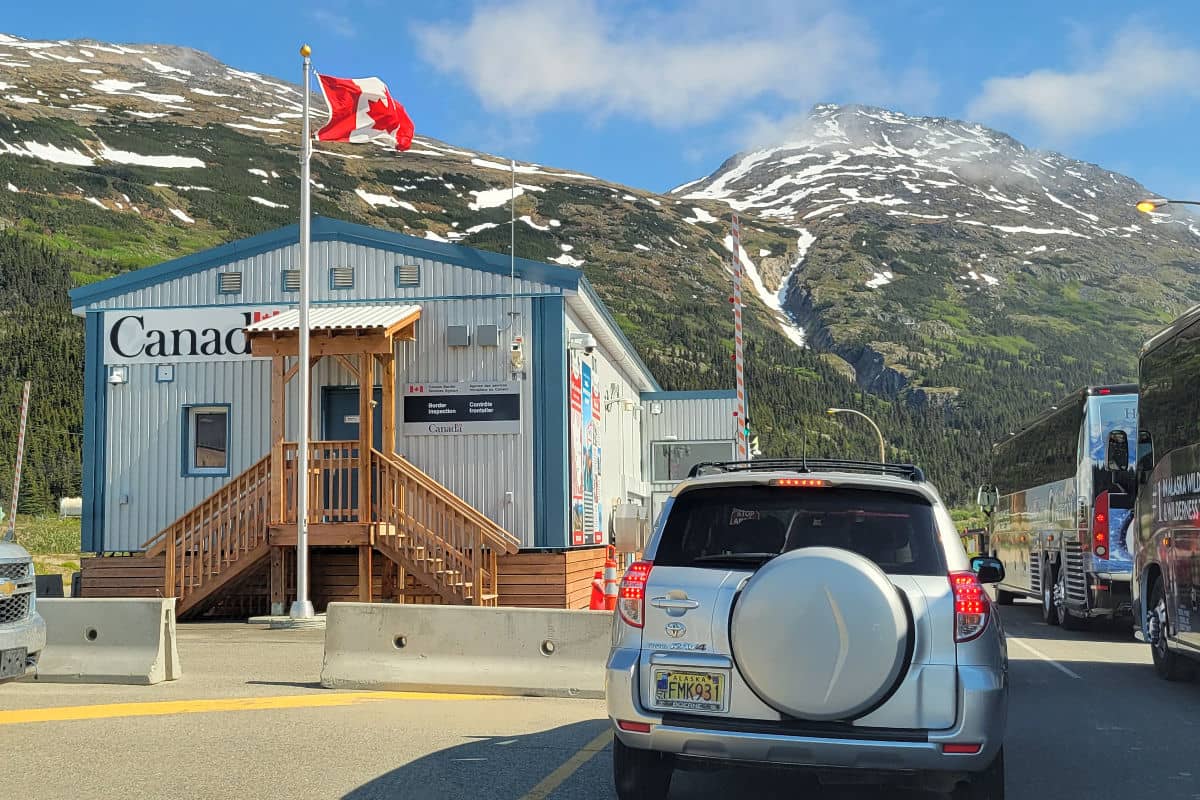
The lesson? Never assume the cruise line will catch the issue and quietly deny you boarding. The consequences of being caught mid-voyage are far worse.
The Only Safe Solution: Criminal Rehabilitation
If you have a DUI conviction and want to visit Canada, whether on a cruise or otherwise, the safest and most reliable route forward is to apply for Criminal Rehabilitation through Immigration, Refugees and Citizenship Canada (IRCC).
Criminal Rehabilitation is a permanent solution. Once approved, you are no longer considered inadmissible to Canada for that offense. It does not expire. It does not require renewal.
To be eligible, at least five years must have passed since the completion of your sentence, including any probation or fines. The application requires documentation of your conviction, evidence of rehabilitation, and a government processing fee.
The process takes time, often a year or more, so plan well in advance of your cruise. Do not leave it to the last minute.
You can find complete instructions for applying directly on the official Government of Canada website.

What About A Temporary Resident Permit?
A Temporary Resident Permit (TRP) is another option for those who cannot yet apply for Criminal Rehabilitation or who need to travel to Canada urgently. A TRP allows inadmissible individuals to enter Canada for a specific, compelling reason and a defined period of time.
However, a TRP is not guaranteed. It is discretionary, assessed on a case-by-case basis, and you must demonstrate that your reason for entering Canada outweighs the risk. A leisure cruise is unlikely to meet that bar on its own.
Criminal Rehabilitation remains the gold standard. It is the only option that permanently resolves the issue, unlike temporary permits.
Practical Steps Before You Book
If you have a DUI and are planning an Alaska cruise, here is what is recommended:
1. Check the itineraries carefully and confirm whether any ports of call are in Canada. If a cruise stops in Vancouver, Victoria, or Prince Rupert, Canada’s admissibility rules apply.

2. Consult a Canadian immigration lawyer. The rules are complex, and a specialist can assess your specific conviction to advise on your best path forward.
3. Apply for Criminal Rehabilitation early. Processing periods can exceed a year. To avoid disruption, don’t book a cruise until you’ve been successfully rehabilitated.
4. Contact your cruise line directly. Ask, explicitly, about their policies for guests with criminal convictions. Get the answer in writing.
5. Never assume staying aboard protects you; it does not. Canadian jurisdiction applies the moment your ship enters Canadian waters.

The Bottom Line
An Alaska cruise with an OVI or DUI on your record is possible—but it requires serious planning and, in most cases, legal steps to resolve inadmissibility before you sail. The stakes are high, as arrests at sea are deeply disruptive and expensive.
Canada is a beautiful country, and Canadian ports are highlights of the Inside Passage. Don’t let a past mistake prevent you from experiencing them, but be sure to follow the rules.
As a Canadian, I can tell you that the border is real, the rules are enforced, and the rehabilitation process, though lengthy, is absolutely worth pursuing. Start the application early, get proper legal advice, and sail with confidence.
The glaciers will wait. Your paperwork shouldn’t.
“This article is intended for informational use only and does not constitute legal advice. Laws and immigration policies can change. Consult a licensed Canadian immigration lawyer for guidance specific to your situation.”