
Best Time To Cruise Alaska For Whales, Bears, And Value
Timing is everything when deciding when to cruise Alaska: the season runs from late April through early October, and the ideal time depends on your personal priorities. This guide breaks down Alaska’s cruise season details: weather, wildlife, pricing, and events.
Pricing may matter most to some, while others prioritize wildlife sightings. Summer brings warmth and peak wildlife. Shoulder seasons mean lower prices, but more variable weather and fewer animals. Spring has emerging wildlife and fewer crowds. Late summer and fall feature salmon runs and occasional northern lights.
We visit Alaska multiple times each year and know the best times to see whales, bears, and salmon, and how to find cruise deals. Use this information to plan the perfect Alaska cruise that matches your priorities.
Alaska Cruise Season Overview
Alaska’s cruise season spans almost six months, with temperatures ranging from the upper 40s in spring to the mid-60s in summer. Daylight hours vary too, from 11 hours in April to 19 hours at the summer peak.
Weather Trends Across The Season
April and May are the driest, with May offering mild mid-50s temperatures and the lowest rain chances. It is our favorite time to cruise Alaska. June brings low-60s temperatures and mostly dry days.
July is the warmest month, sometimes reaching the 70s, but it is also much wetter. August continues to be warm but rainy, with showers on many days. By September and October, temperatures drop and rain increase as the season winds down.
Pack layers and waterproof gear no matter when you cruise. Southeast Alaska is a rainforest, so light rain and fog are always possible. Start with a base layer, add thermal for warmth, and wear a waterproof coat.

Daylight Hours And Seasonal Variations
Mid-April starts with limited daylight, which increases to 17 hours by mid-May. June delivers the longest days, averaging around 19 hours, thanks to the summer solstice. That extra light gave us a better chance of spotting wildlife.
July stays bright with 17–19 hours of daylight, depending on where you sail. In August, daylight tapers to about 15 hours. Long summer days mean later excursions and more flexibility.
Best Time To Cruise Alaska To See Wildlife
During the Alaska cruise season, wildlife sightings peak at different times. Knowing these patterns increases the chances of seeing whales, bears, eagles, and other iconic Alaskan wildlife.
Peak Months For Wildlife Sightings
May through June offers exceptional opportunities to see humpback whales as they migrate to Alaska’s feeding grounds in the Inside Passage and Glacier Bay. These early summer months also bring active sea otters and diverse seabird populations.

Harbor seals give birth in these months and are often sighted on Gulf of Alaska cruises. I took the 26 Glacier Cruise from Whittier and saw many seals with their pups on icebergs.
July and August are prime times for salmon runs and bears trying to catch them. Head to Steep Creek near Mendenhall Glacier in Juneau or Brooks Falls in Katmai National Park.
Bald eagles soar overhead in greater numbers during these months. Orcas patrol coastal waters with increased visibility. The warmer weather and prolonged daylight create ideal conditions for wildlife viewing.
September extends the wildlife-viewing season, providing chances to see bears still fishing for salmon. We can also spot bull moose and caribou herds in Denali. The first 15 miles of the park offer great moose sightings, and also around the visitor center. Wildlife sightings are enhanced with fall colors.
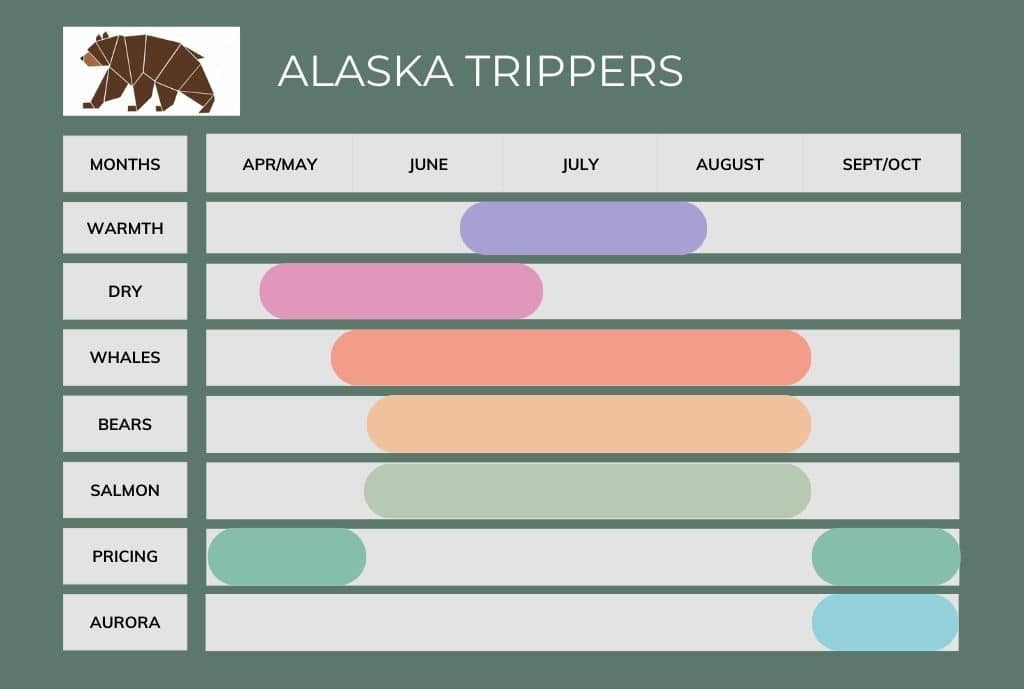
Late June through July is the sweet spot for viewing most wildlife, but it comes with higher pricing.
Where To See Bears, Eagles, And More
The Inside Passage is Alaska’s premier marine wildlife corridor. We recommend cruises through this route for humpback whales, orcas, porpoise, and seals.
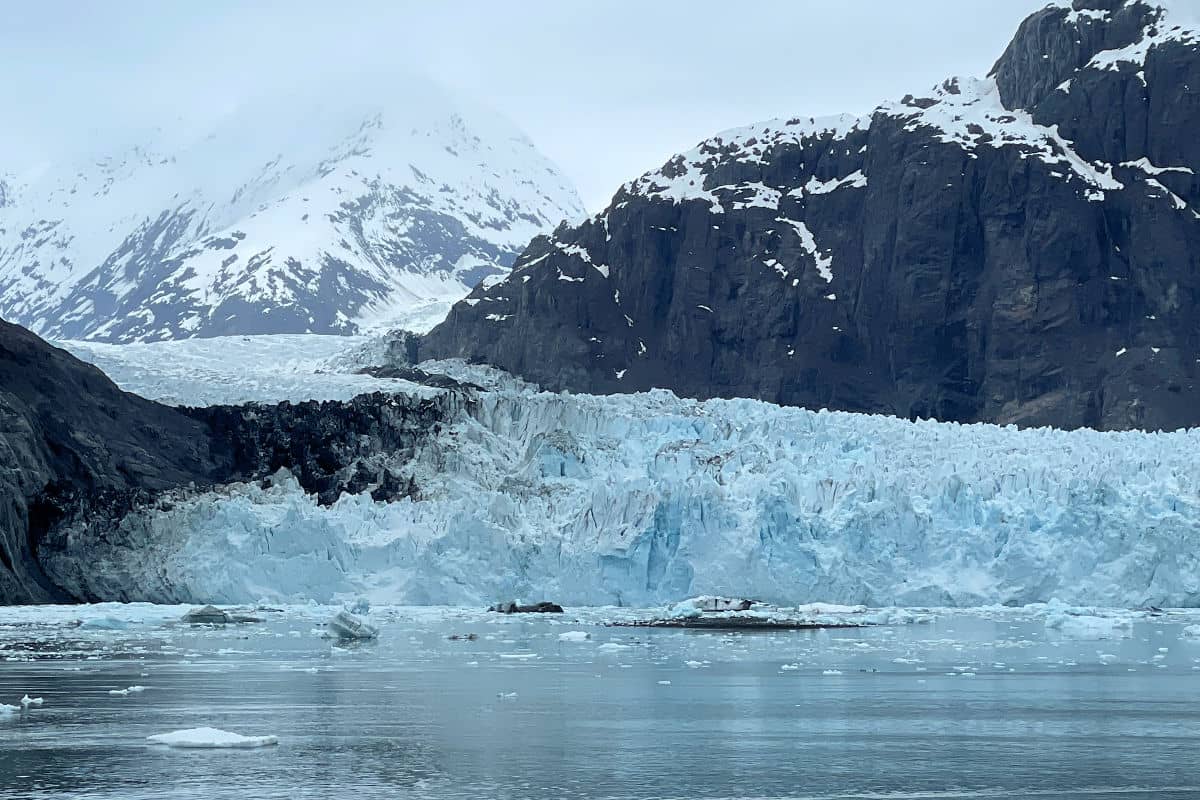
Glacier Bay National Park provides exceptional whale watching from May through June. The protected waters attract feeding humpbacks in high concentrations. The sea otter population has exploded in the park, with good odds of seeing them by Margerie Glacier.
For bear viewing, river excursions during July through September deliver the best results. Bears congregate at salmon streams during spawning runs.
Guided tours to locations like Pack Creek near Juneau, Anan Creek (Wrangell), and Brooks Falls (Katmai) offer close-range viewing platforms. Brown bears are spotted there.
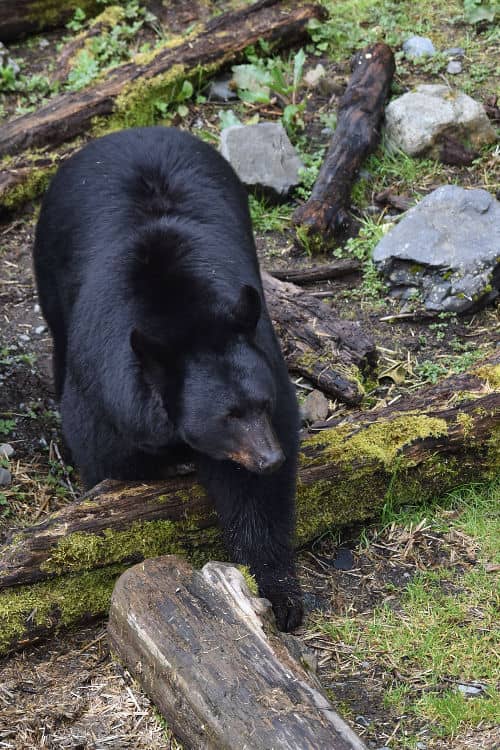
The road trip from Skagway to Emerald Lake in the Yukon offers a good chance to see black bears. For a guaranteed sighting of bears, head to the Fortress of the Bear in Sitka, the Alaska Wildlife Conservation Center from Anchorage, or Grouse Mountain in Vancouver.
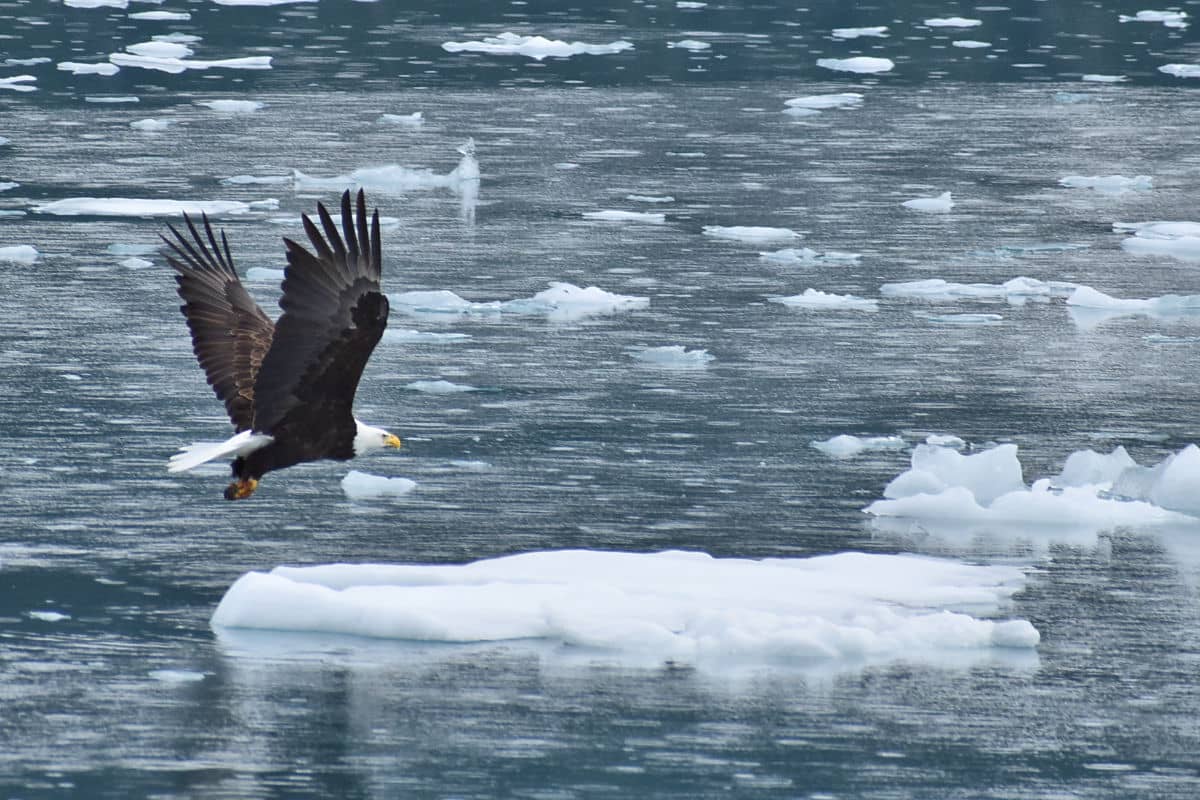
Coastal expeditions through glacier-carved fjords provide opportunities to spot eagles hunting along shorelines or goats on the cliffs. These excursions frequently include expert naturalists who identify wildlife behaviors and habitats we might otherwise miss.
Best Time To Cruise Alaska To See Whales
Whale migrations to Alaska’s nutrient-abundant waters create predictable viewing windows, with most species arriving between April and September. Orcas appear consistently throughout the season, while humpback whales offer the most reliable sightings.
When To See Orca
We find orcas in Alaska waters throughout the entire cruise season. These apex predators follow salmon runs and maintain year-round resident populations in certain areas.
Southeast Alaska’s Inside Passage offers occasional orca sightings near Juneau, Ketchikan, and the waters around Icy Strait. We’ve seen orca in both Juneau and Ketchikan. The waters around Victoria, BC, have predominantly orca, and it’s a great place to take a whale watching tour.

Resident orcas hunt salmon near river mouths and channels, making July and August particularly productive for sightings when salmon runs peak.
Best Months And Destinations For Humpbacks
June and July are the prime months for humpback whale sightings in Alaska. These massive mammals arrive in large numbers to feed on krill and small fish in the cold, nutrient-dense waters.

Glacier Bay National Park offers exceptional humpback viewing from June through August. Icy Strait Point whale watching is popular and designed for humpback encounters during peak season. We’ve even viewed them from the boardwalk.
Frederick Sound becomes a humpback hotspot in July when bubble-net feeding behavior creates spectacular viewing opportunities. We recommend booking whale-watching excursions in Juneau during June and July for the highest success rates.
|
Location |
Best Viewing Month |
Whale Activity |
|---|---|---|
|
Glacier Bay |
June-August |
Feeding, breaching |
|
Icy Strait |
June-July |
Bubble-net feeding |
|
Frederick Sound |
June-August |
Large congregations |
We’ve taken multiple whale-watching tours in Alaska, with a 100% success rate of seeing whales.
Best Months For Salmon Runs
May–September is the prime salmon fishing season on Alaska cruises. Each month brings different species and locations near major ports.
Late May–July: King (Chinook) salmon open the season. Expect large fish, often 15–30 pounds. Top spots include the Kenai, Nushagak, and Yukon Rivers. Where there are salmon, there are bears and bald eagles, eager for an easy feast.
June–July: Sockeye (red) salmon arrive in force. Popular areas include the Kenai River and systems near Anchorage. In Ketchikan, cruise guests often rent fishing gear and try their luck on the Stedman Bridge at the end of Creek Street.
Mid-July: Pink salmon begin strong runs. Excellent opportunities exist near Ketchikan, Juneau, and Sitka, often close to town.
July–October: Silver (Coho) salmon start in July and peak later in the season. It’s also the month when multiple species run at once. Prime cruise-port locations include Juneau’s streams, Sitka rivers, and Ketchikan creeks.
August: Fishing remains strong, especially for silver salmon. Bears often cluster along streams near Juneau and Sitka, adding to the experience.
|
Salmon Species |
Peak Months |
Average Weight |
|---|---|---|
|
King (Chinook) |
May – July |
15-30 lbs |
|
Sockeye (Red) |
June-July |
6-12 lbs |
|
Pink |
July-August |
3-5 lbs |
|
Silver (Coho) |
July-October |
8-12 lbs |
|
Chum (Dog) |
July-August |
8-15 lbs |
Optimal Months For Northern Lights
The standard Alaska cruise season offers minimal Northern Lights visibility due to extended daylight hours. Prime aurora viewing occurs from September through early April.
Should You Book An Alaska Cruise To See The Aurora?
Cruising to Alaska in September or early October offers the best opportunity for viewing the northern lights. Expect roughly 12-14 hours of darkness by late September. The aurora viewing window typically runs from 10 PM to 2 AM.
March and early April cruises are extremely rare, though these months offer excellent conditions for northern lights. Only repositioning cruises from Asia to the Pacific Northwest travel through Alaskan waters with aurora viewing opportunities.
Is seeing the aurora in Alaska on your bucket list? Consider a land-based winter trip.

Best Time To Cruise To Save Money
Alaska cruise prices fluctuate significantly throughout the season, with shoulder months offering the most cost-effective choices. Early spring and late fall sailings can cost several hundred dollars less per person than peak summer departures.
Consider An April/May Sailing
April and May are the most economical times to cruise Alaska. I cruised to Alaska in April on the Norwegian Bliss. I enjoyed empty ports but found excursions were limited. For instance, helicopter tours over glaciers and certain wildlife trips that required specialized guides were unavailable.
Alaska travel in May strikes the best balance between cost, value, and experience. The weather improves considerably, with May being the driest month of the cruise season and only a 25 percent chance of rain. Glaciers are beautiful with the mountain backdrop still heavy with snow.

We often cruise in May to avoid crowds and take advantage of savings. The trade-off is limited wildlife viewing and port activities in the early weeks. However, many shops in smaller towns like Skagway open for business by mid to late May.
Whale watching remains excellent, with humpbacks, orcas, and gray whales actively feeding in southeast Alaska waters.
Late Season Voyages
September through October delivers another window for savings. We’ve seen deals as peak season winds down, particularly for departures after mid-August. These benefit guests who live near a port and can drop-and-go.
September offers mature wildlife viewing opportunities as bears continue feeding before hibernation and salmon runs remain active. The weather turns cooler with increasing rainfall, but we’ve experienced fewer mosquitoes than earlier in the summer.
October sailings provide the deepest discounts but involve considerable weather challenges. Temperatures drop considerably, many shore excursions have closed, and daylight hours decrease substantially.
Worst Time To Cruise To Alaska
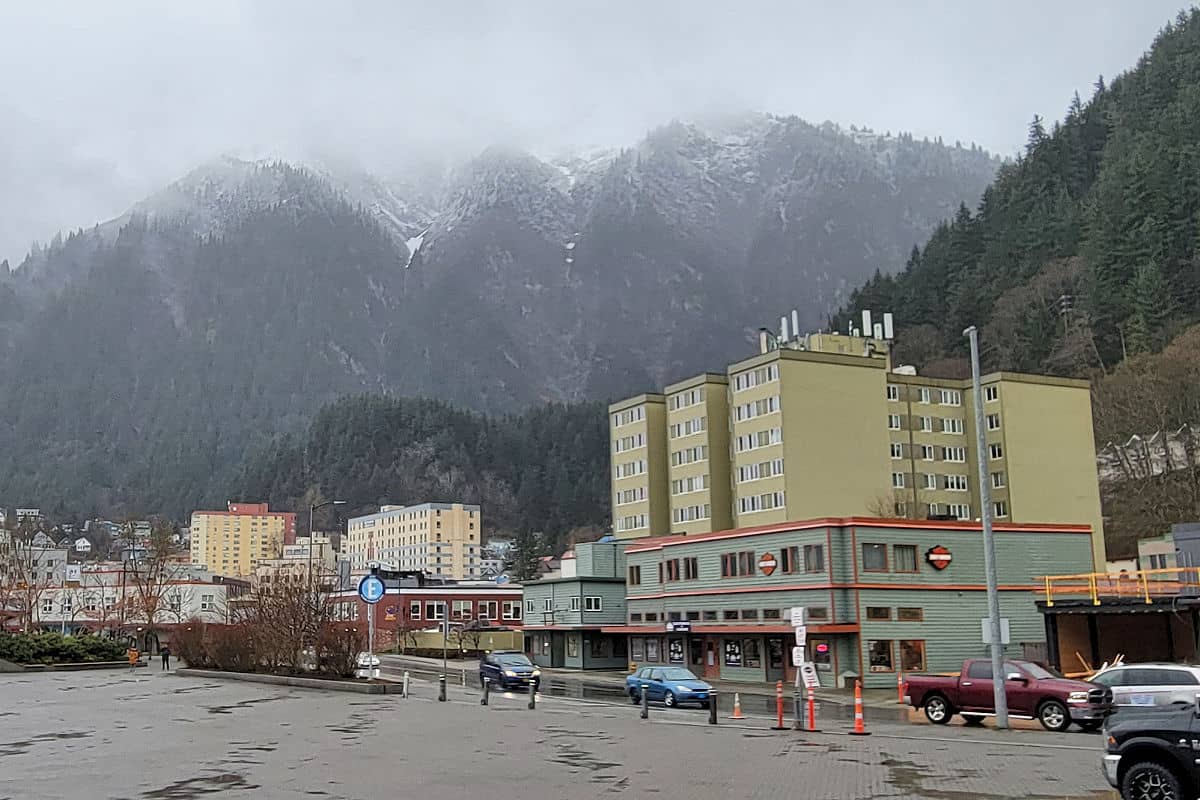
April and October represent the most challenging months for Alaska cruises. These bookend months provide cold temperatures, significant rainfall, and high winds that can affect both coziness and safety on the water.
Weather Challenges In Shoulder Season
In April, Alaska is still emerging from winter. I encountered shorter daylight hours, temperatures that hover near freezing, and snow flurries in Juneau and Glacier Bay. In Skagway, the winds were bitterly cold, even with a thick winter coat.
Many wildlife species remain less active, and some excursion options are limited or closed entirely. No helicopter tours are available in April from coastal ports like Juneau and Skagway. Since I cruise to Alaska annually, it didn’t bother me.
October presents similar issues as the season winds down. The state begins transitioning back to winter with more precipitation and the possibility of early snowfall in higher elevations. Many tour operators close their businesses in September, so again, excursions are limited.
If you’re taking a one-and-only Alaska cruise, I don’t recommend April or October.
When To Avoid For Specific Reasons

If you’re looking to avoid crowds and don’t mind cooler weather, these months offer the lowest prices. However, if your priority is wildlife viewing, warm weather, or guaranteed access to all attractions, April and October are the least suitable months.
Shoulder season is prone to storms, which can cause rough seas. Storms can affect a ship’s ability to dock or change itinerary on the fly.
Final Thoughts: Prioritize Wildlife, Weather, Or Price
Your ideal Alaska cruise timing depends on what matters most to you. We recommend deciding between three main priorities before booking.
If wildlife viewing is your top priority, July is the best month. Bears are fishing, whale populations are peaking, and birds are gathering near spawning streams. June and August also offer strong wildlife opportunities, though slightly less consistent than peak July.
For the best weather, late May and June offer drier days. May averages the driest month with just a 25 percent chance of rain, while June brings mild temperatures in the low 60s with relatively clear skies.
Cost-conscious travelers should target the shoulder seasons. Late April, May, September and October offer the lowest prices. Late August also sees prices drop as peak season winds down.
Consider your openness to date changes and your tolerance for rain or cooler temperatures. Alaska’s cruise season, from late April through October, means every month offers something valuable, though with different trade-offs.
