
5 Reasons Fort Abercrombie Belongs On Your Kodiak List
Fort Abercrombie State Historical Park occupies 182 acres at Miller Point on Kodiak Island. Did you know Alaska played a critical role in WWII? At Fort Abercrombie, history meets untamed beauty. From mossy bunkers to bear-filled forests, we are sharing five unforgettable reasons to visit.
The park is maintained by the Division of Parks and Outdoor Recreation, which preserves the ruins of a coastal defense installation. Nestled amongst lush landscapes, we explored discarded military artifacts and relics that tell the story of America’s wartime presence in Alaska.
If you’re seeking an activity on Kodiak Island, Fort Abercrombie blends WWII history with pristine coastal beauty. When arriving by cruise ship, the park isn’t walking distance so arrange transportation.
5 Things To Love About Fort Abercrombie
While wildlife and pristine landscapes bring visitors to Alaska, Fort Abercrombie attracts visitors for its blended beauty. The park offers strategic lookouts, military relics, diverse hiking trails, and coastal exploration opportunities.
Rich History And Military Artifacts
Fort Abercrombie State Historical Park sits on Kodiak Island’s eastern shore. During World War II, the U.S. military established it as part of Alaska’s strategic defense network. Two other installations were established: Fort Tidball on Long Island and Fort J.H. Smith at Cape Chiniak.
The installations protected against potential Japanese attacks on the Aleutian Islands and mainland Alaska. Between 1941 and 1945, up to 200 soldiers were stationed at Fort Abercrombie. Its elevated position on the cliffs provided excellent visibility across the North Pacific.
After the war ended, the military abandoned the installation. The park became part of Alaska’s state system in 1969. A year later, it was added to the National Register of Historic Places. Fifteen years later, it was designated a National Historic Landmark.
Its induction ensures the protection of both its historical significance and unique natural features for future generations. Today, the park serves dual purposes as both a historical preserve and a recreational area.

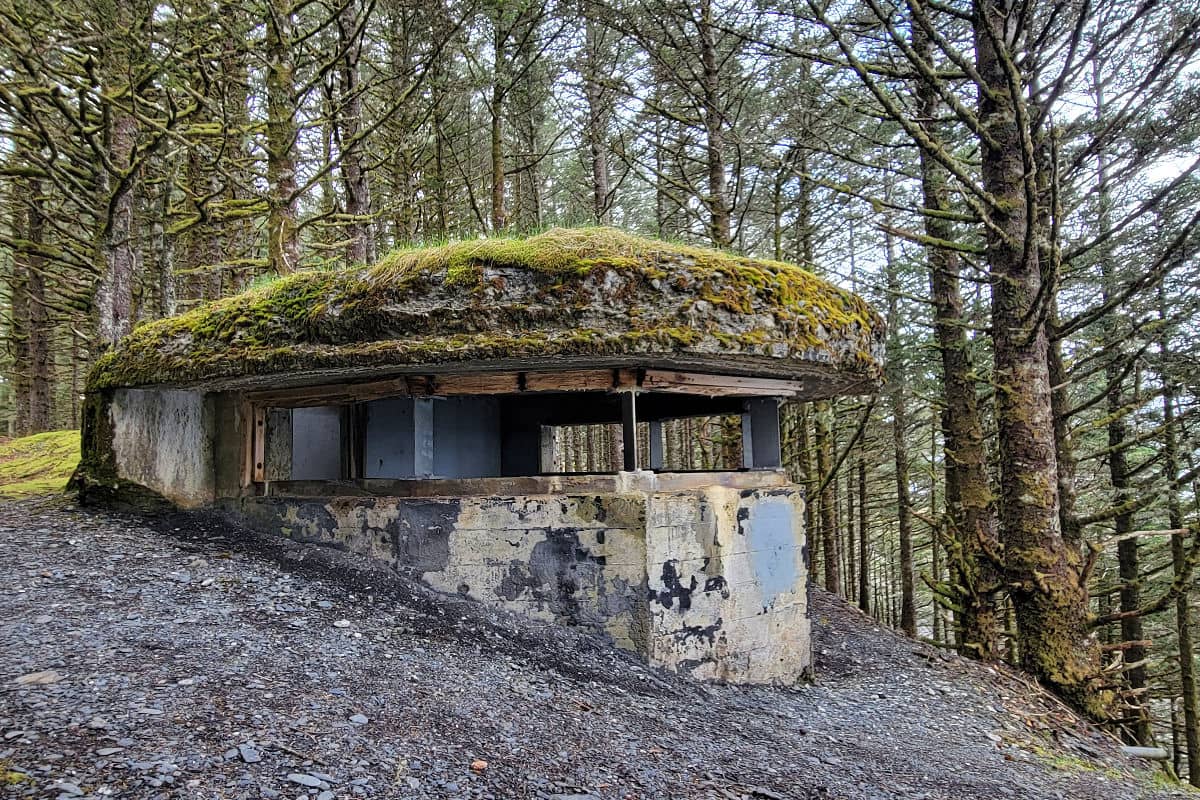
We explored concrete gun emplacements and saw several relics that once protected Kodiak from potential invasion during the war. We couldn’t imagine manning these during Alaska’s harsh winters.
Underground ammunition magazines remain accessible. These structures show how soldiers stored weapons and supplies during wartime operations.
Key Military Features:
- Concrete bunkers.
- Gun battery positions overlooking the ocean.
- Underground storage facilities.
The fortifications date back to the early 1940s when the military established defensive positions. Many artifacts remain in their original locations, providing a rich and authentic historical context.

We even found gun fragments and foundations of pump houses scattered along the hiking trails. These pieces help tell the story of Kodiak’s strategic military importance and act as silent reminders of Alaska’s wartime role.
Hiking Trails At Fort Abercrombie State Park
After exploring the military remnants, we swapped history for nature and set off on the park’s forested trails. Multiple trail options wind through diverse terrain, and they are well-maintained. The paths were easy and included some slight inclines and stairs.

Be aware that Kodiak Island is home to 3500 Kodiak bears, a species larger than coastal brown bears. It’s important to be aware of your surroundings when hiking. During our visit, a sign indicated a sow, and two cubs were spotted the day before. We noticed fresh bear scat in that location.
In May, it was 41 degrees Fahrenheit, ideal for hiking, but cold alongside the ocean. We recommend taking a jacket depending on the hiking season.
In the park, hikers can choose from easy walks to more challenging routes depending on their fitness level and available time. We decided to spend a few hours and do multiple routes. Many trails intersect with others, so we could change our route on the fly.
The Miller Point Trail leads to dramatic coastal viewpoints. This path took us through spruce forests with fireweed ground cover, before opening to rocky overlooks above the Pacific Ocean. We suggest taking a pair of binoculars for a chance to spot humpback whales offshore.

The Lake Gertrude Trail offers a quieter hiking experience and is wheelchair accessible on its west side. This route circles a small freshwater lake surrounded by meadows.
The lake is stocked yearly with rainbow trout, and anglers may catch up to ten fish per day. Part of the trail is on a wooden boardwalk, which is ideal for novice hikers. It includes a few benches to sit on and savor the scenery.
During our visit, we met several hiking groups on this route. While Lake Gertrude Trail lacked ocean views except for a small section to the north, it was picturesque in its own way. Heavy moss and forest fungus blanketed the vegetation.
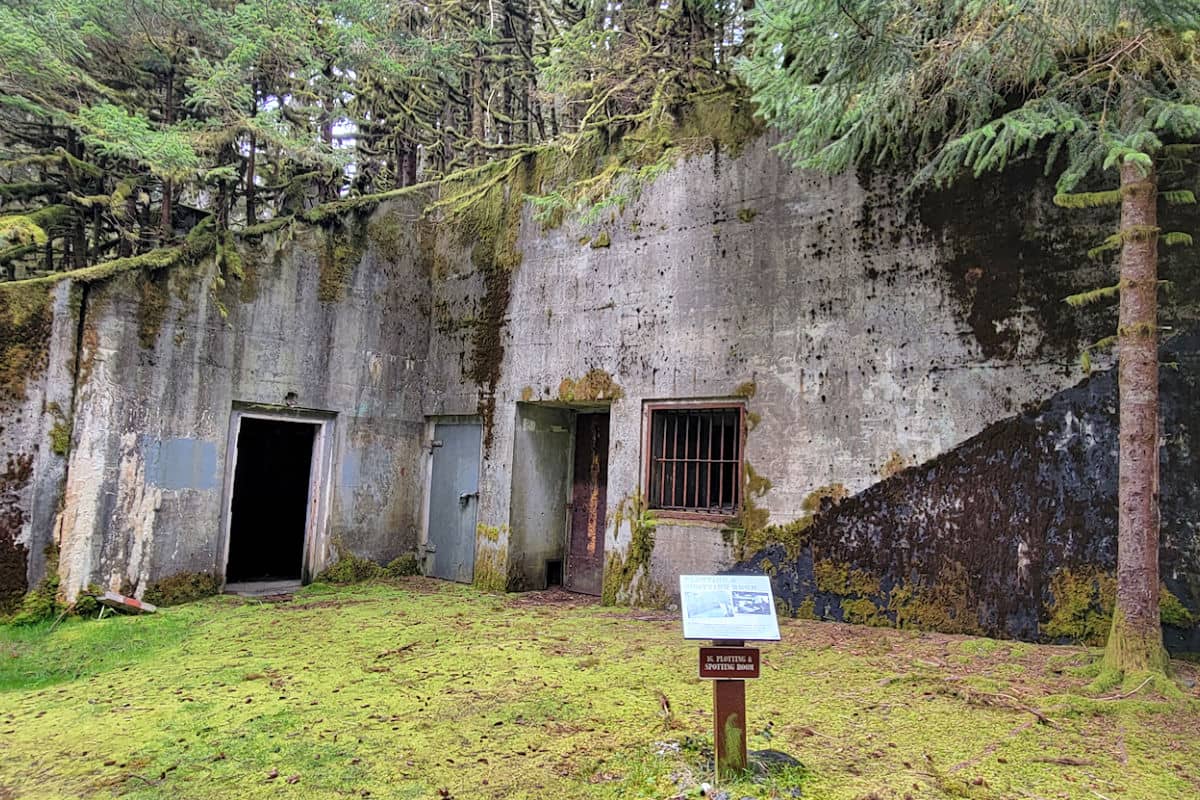
If you’re hiking and hoping to see military artifacts, skip Lake Gertrude and do the Miller Point coastal trail instead. On the latter, we found a plotting and spotting room, generator houses, and gun emplacements.
Fort Abercrombie is dog-friendly and offers a large off-leash area east of Lake Gertrude.
Kodiak Military History Museum
One of the highlights of our visit to Kodiak Island was exploring the Kodiak Military History Museum. The museum, housed in an underground emplacement magazine, features Fort Abercrombie military artifacts.

These museums always fascinate me, since I was raised in a military family. Inside, we learned about the soldiers who lived and worked at this remote Alaskan outpost.
Historical photographs and a scale model show the fort during active military operations. These help us understand how the installation looked when fully operational.
Displays include uniforms, equipment, and personal items from the World War II era. The museum explains how military personnel adapted to Kodiak’s harsh weather conditions. We appreciated that the exhibits were hands-on, and we were encouraged to touch and try them.
Brian tried out the military Jeep for size. I was more interested in the 60-inch Sperry searchlight used for harbor and air defense.

The museum operates seasonally with limited hours. Ex-military volunteers staff the museum who have extensive knowledge of the equipment and wartime operations. We appreciated that they kept a candy stash and offered a candy of our choice as we exited.
Outside, be sure to check out the north and south gun mounts on either side of the building oceanside.
Wildlife Spotting Opportunities
Along with bears, marine mammals are frequently seen in the waters visible from park viewpoints. Try to spot sea otters floating and feeding in kelp beds near the shoreline.
Steller sea lions gather on offshore rocks during certain seasons. These large pinnipeds are visible from the coastal trails and observation areas.
Whales are also prevalent in these waters. In Spring, Gray whales can be spotted off Miller Point during their migration. Humpbacks are the most spotted of the whale species, but Orcas and Fins may be sighted too.

Fin whales are harder to see since they barely break the surface and don’t generally create any fluking action.
Bald eagles nest in the park’s mature spruce trees. We can observe these raptors hunting fish and interacting with their young during nesting season. Sometimes we couldn’t see them but could hear their high-pitched shrills.
Seabirds include cormorants, murres, gulls, and puffins. The rocky coastline provides ideal nesting habitat for multiple marine bird species.
Tide Pools And Beach Combing
Rocky intertidal zones reveal a diverse array of marine life during low-tide periods. Look for sea stars, anemones, mussels, and small crabs in pools left by receding water.
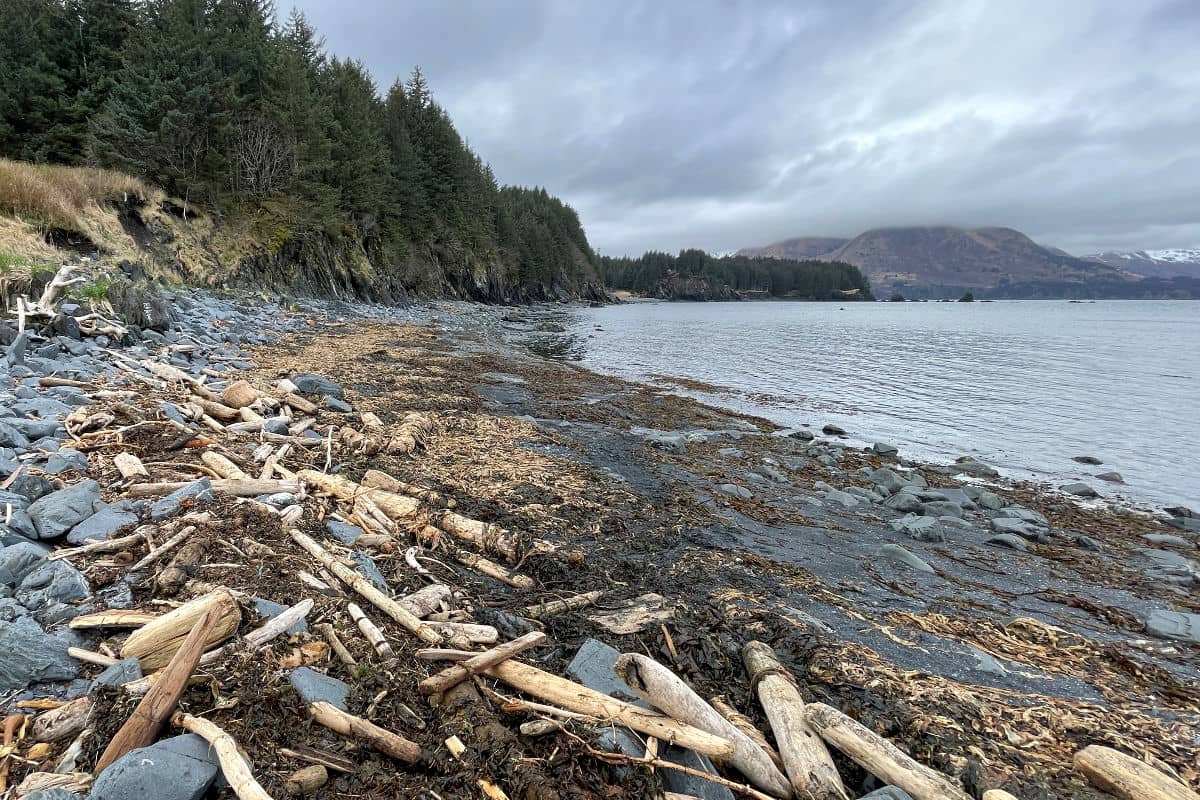
Beach combing is popular in Kodiak for the coveted sea glass. Sea glass comes from broken bottles and jars that the waves have tumbled to create smooth edges. Beach combers can find them in many colors and sizes and often turn them into jewelry.
The park’s beaches offer excellent opportunities for beachcombing. Along with sea glass, look for shells, driftwood pieces, and smooth stones shaped by wave action.
Tide timing has a significant impact on the success of exploration. It’s best to check the tide charts to plan visits during the optimal low-tide windows.
Beach areas provide different treasures depending on recent weather conditions. Storm events often bring new items to shore for discovery.
Visiting Fort Abercrombie State Historical Park
Fort Abercrombie offers multiple ways to experience its acreage. We could choose between a structured tour or an independent exploration of the park’s trails, bunkers, and coastal viewpoints.

Cruise Excursion Vs. Self-Exploration
Many Kodiak visitors arrive via cruise ships and face time constraints. Cruise lines typically provide an excursion called Fort Abercrombie on your own. This tour includes drop off and pick up, but usually only allows one hour in the park.
Other excursions include a guide and a brief visit to key attractions, such as bunkers, emplacement, and popular viewpoints.
Cruise Excursion Benefits:
- Transportation included.
- Guided interpretation.
- Time-efficient.
- Safety in numbers.
Self-exploration allows unlimited time to walk all available trails and browse the Kodiak Military History Museum. The park contains 4 hiking trails of varying difficulty levels, with most rated as easy for families.

Since we wanted to explore Fort Abercrombie without feeling rushed, we got a car rental in Kodiak through Turo. Our rental cost less than the cruise line excursion, and we had the freedom to explore other areas of Kodiak.
Independent visitors can access remote sections of the park that cruise groups often miss.
Things To Know Before You Go
While the park is open year-round, the Kodiak Military History Museum has limited hours between May and September.
Other visiting tips:
- Driving time: 15 minutes from the Kodiak cruise port.
- Parking fee: USD 5 daily fee.
- Bathrooms: There are pit toilets at some parking areas.
- Best Season: Summer for trails and wildlife spotting.
We suggest allowing 2-3 hours for a comprehensive exploration of all bunkers, coastal viewpoints, and forest trails. It’s not surprising that Fort Abercrombie State Park is the highlight for most travelers to Kodiak Island. It certainly was for us!
