
Seasickness On An Alaska Cruise: What Actually Works
Whenever friends hear that we cruise to Alaska every year, they almost always ask about seasickness. It’s understandable—most first-timers imagine the Pacific Ocean and expect the whole trip to be rough.
The truth is more specific than that, and it depends entirely on which ship route you choose, which port you’re sailing toward, and a few cabin decisions you can actually control.
This guide explains where you’ll feel the ship move, what remedies worked for us (and what didn’t), and how to choose a cabin that is comfortable even if the water gets rough.
Inside Passage Cruises Are Calmer Than You Think
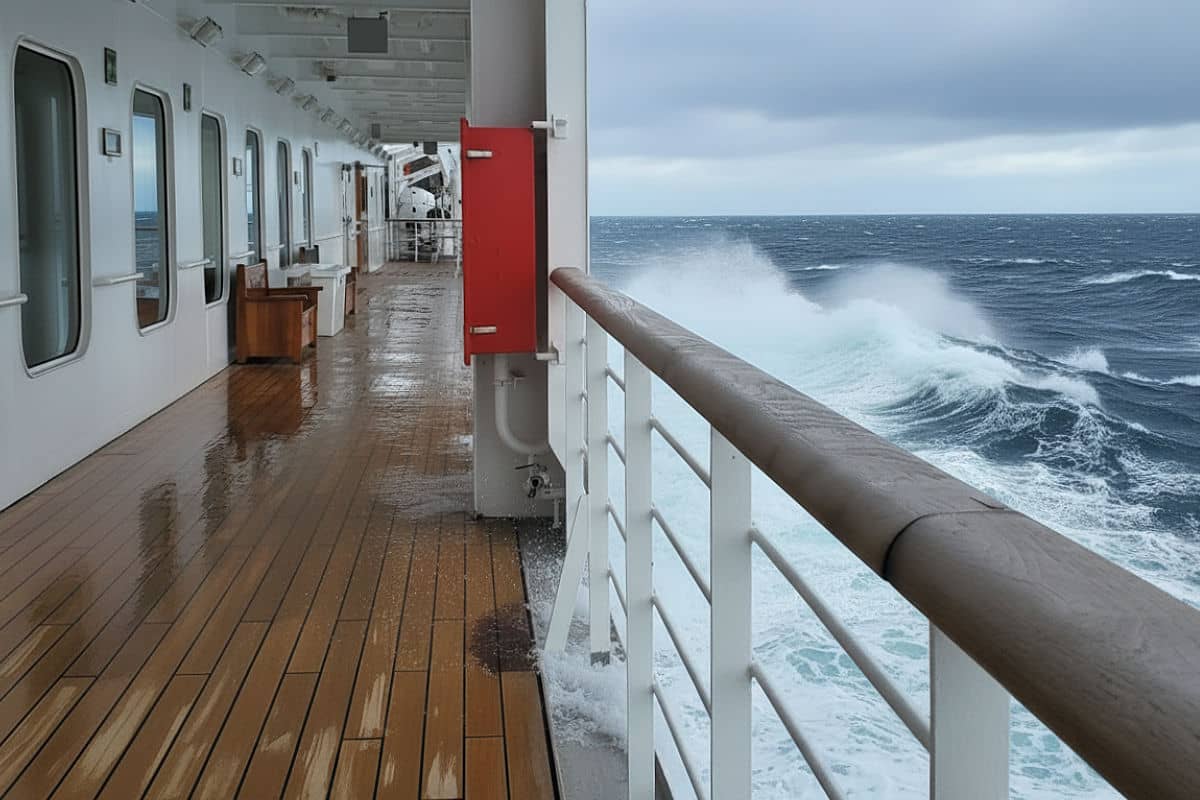
Most Alaska cruises follow the Inside Passage, and there’s a good reason for that. A chain of islands protects this route from the open Pacific nearly the whole way, so the ship usually travels through calm, smooth water.
We’ve taken this route more times than we can remember, and most trips have been smooth the entire way. My first Alaska cruise was the exception, with seas so rough one night that hardly anyone showed up for dinner.
But there’s one important exception you should know about.
Itineraries To Sitka Are The Outlier
Sitka is on the open Pacific side of Baranof Island, while Juneau, Skagway, and Ketchikan are all tucked behind the Inside Passage’s protective islands. To reach Sitka, ships must leave the sheltered waters for several hours each way.
We experienced this ourselves on a Royal Caribbean cruise a few years ago. The ship was steady for two days, but as soon as we headed toward Sitka, the waves picked up. The sundeck emptied quickly, and the crew put out barf bags on the stairs.
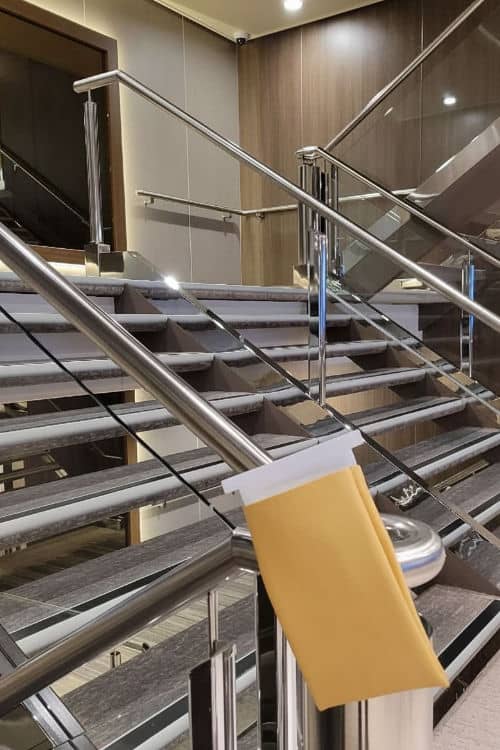
If your cruise stops in Sitka, that’s the day to be prepared for, not the entire trip. Sometimes, if the seas are especially rough, ships even skip Sitka altogether.
Late-Season Sailings Bring Rougher Water
Sailings in early and mid-summer, from June to early August, are usually the calmest. By September, storms become more common in the Gulf of Alaska and the Inside Passage, so the water can get much rougher.
Still, rough water can show up any time of year. Our roughest trip was actually in late July, as we approached Sitka.
Modern ships are designed to be stable. If you can, choose a newer ship instead of an older one for the smoothest ride.
Inside Passage Vs. Gulf Of Alaska: A Side-By-Side Look
These are the two major route types for Alaska cruises, and they feel different in terms of motion. Inside passage or Gulf of Alaska itinerary: which should you book?
|
Inside Passage |
Gulf of Alaska |
|
|---|---|---|
|
Typical sea state |
Calm to mild. Protected by islands almost the entire route. |
Open ocean for at least one full day. Swells are normal, not a sign of bad weather. |
|
Roughest stretch |
Crossing to or from Sitka, since it sits on the open Pacific side. |
The open crossing between Glacier Bay or Hubbard Glacier and the Gulf, plus the approach to Seward or Whittier. |
|
Season risk |
Low early and mid-season. Rises in September as fall storm systems move in. |
Moderate all season, higher in September and into early fall. |
|
Who feels it most |
Anyone sensitive to motion, mainly on the Sitka call or a stormy September sailing. |
Anyone sensitive to motion, for a longer stretch of the itinerary. |
The short version: Inside Passage itineraries are the gentler choice overall, but a Gulf of Alaska sailing isn’t something to fear either. It simply trades a calmer route for access to Hubbard Glacier than a one-way itinerary from Vancouver to Anchorage or a round-trip from Seattle.
We’ve done both more than once, and the day of the Gulf crossing is genuinely something to look forward to. Honestly, our roughest sailings were always to and from Baranof Island.
When comparing itineraries from Seattle or Vancouver, cruises to Alaska from Vancouver generally offer calmer seas. Ships leaving and returning to the British Columbia port sail between the mainland and Vancouver Island for a day. This route is also more scenic.
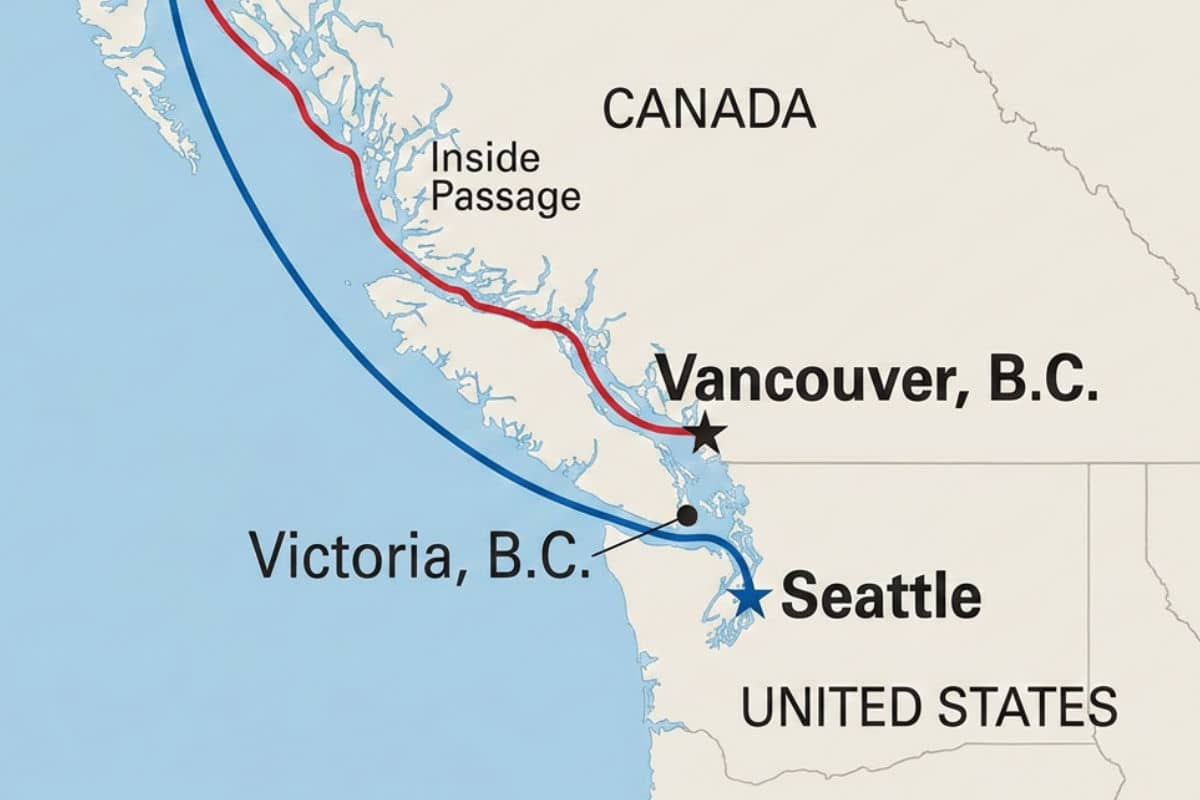
Seattle Alaska departures cruise on the west side of Vancouver Island, which offers no protection from the open waters. If sensitive to motion sickness, a Vancouver departure is preferable over a Seattle one.
Remedies That Actually Helped Us
We don’t usually get motion sickness, but there have been a few cruises where we needed some help. Over the years, we’ve tried almost everything. Some remedies work, and some don’t.
- Acupressure or sea bands are cheap, reusable, and can help with mild queasiness. Personally, I haven’t had much success with them, even after a few tries.
- Ginger chews or ginger tea can help. The dining room often has ginger ale available during rough patches, and it’s surprisingly effective.
- Over-the-counter options like Bonine or Dramamine work best if you take them before you feel sick. Once you’re queasy, it’s harder to catch up. Many cruise lines offer free Dramamine at guest services or near the medical center. Dramamine can make you sleepy, but Bonine doesn’t.
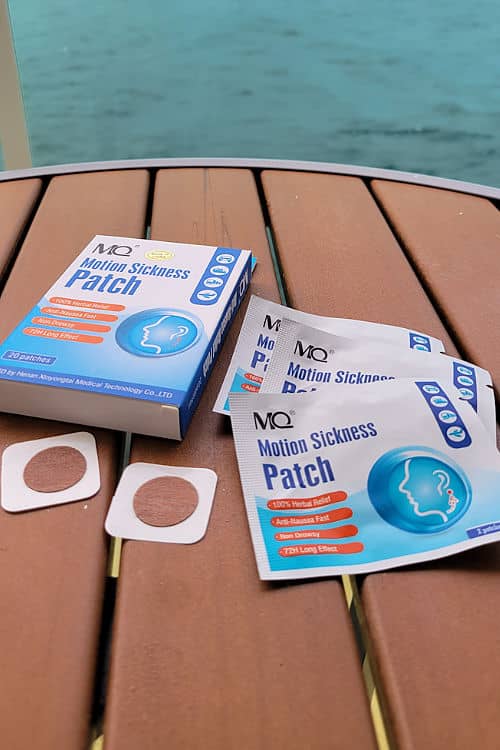
- The scopolamine patch is the strongest remedy we’ve tried. You need a doctor’s prescription for it, and each patch lasts up to three days. We also buy over-the-counter patches online, which are inexpensive and they work well.
- Getting fresh air and looking at the horizon can help. Going out on deck and focusing on something steady in the distance helps your body adjust faster than staying inside without windows. This works for mild motion sickness, but not if you’re already feeling sick.
Green apples and dry crackers are said to help, but they don’t work as well as Bonine, Dramamine, or a patch.
One thing that surprised us is how much staying hydrated helps. If you’re dehydrated, motion feels worse, and the dry air in most cabins doesn’t help.
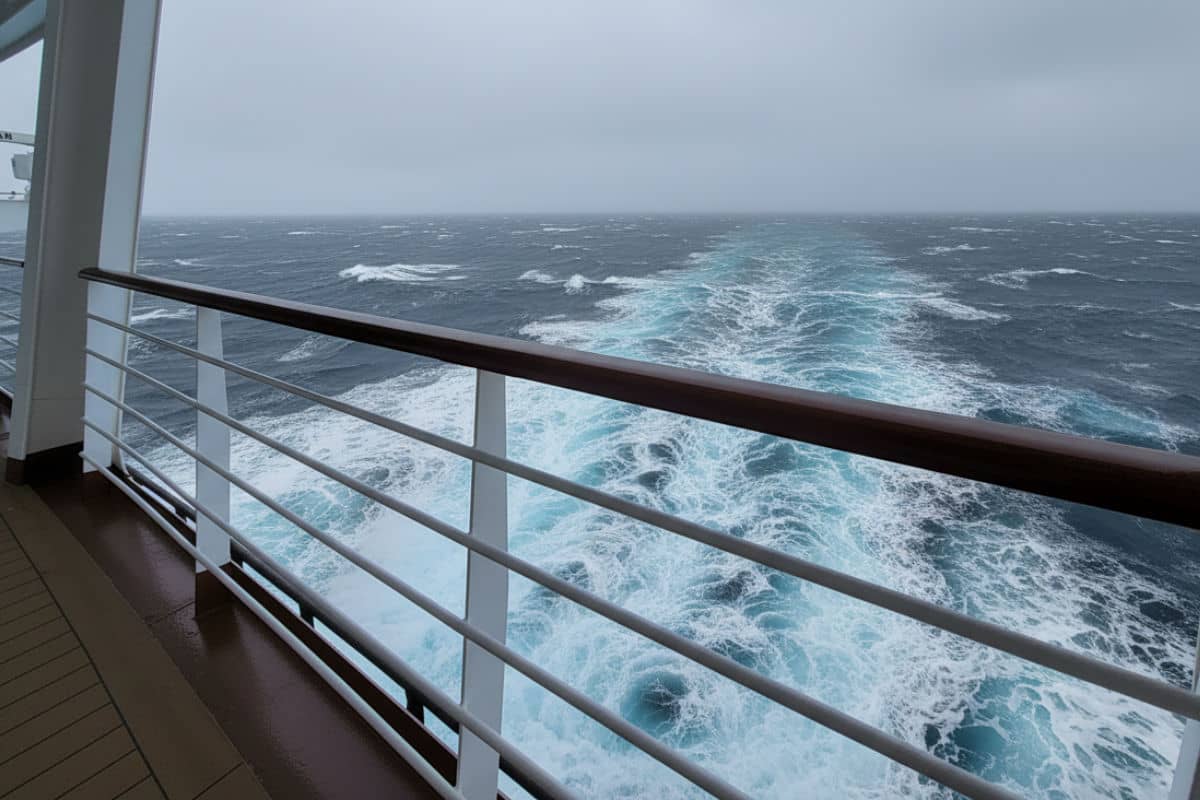
If you’re worried about rough seas, the best thing you can do is start treating symptoms before they begin. Check the daily planner or listen to the captain’s updates for weather and sea conditions. Remember, what helps one person might fail for another.
Cabin Choice Matters More Than People Realize
If you’re really worried about seasickness, your cabin location can matter even more than any remedy.
Choose A Lower Deck
You’ll feel the most motion at the top of the ship and the least near the waterline. A cabin on a lower deck will feel much more stable than one higher up, especially during a Gulf crossing or rough weather near Sitka.
Choose Midship Over Bow Or Aft
The front and back of the ship move the most in waves. The middle is closer to the ship’s center of gravity, which is why crew cabins are usually midship.
We found this out the hard way on our first cruise. We booked a cabin at the back to save money and felt every wave for two days. Now, we always choose midship rooms on cruises known for rough seas.
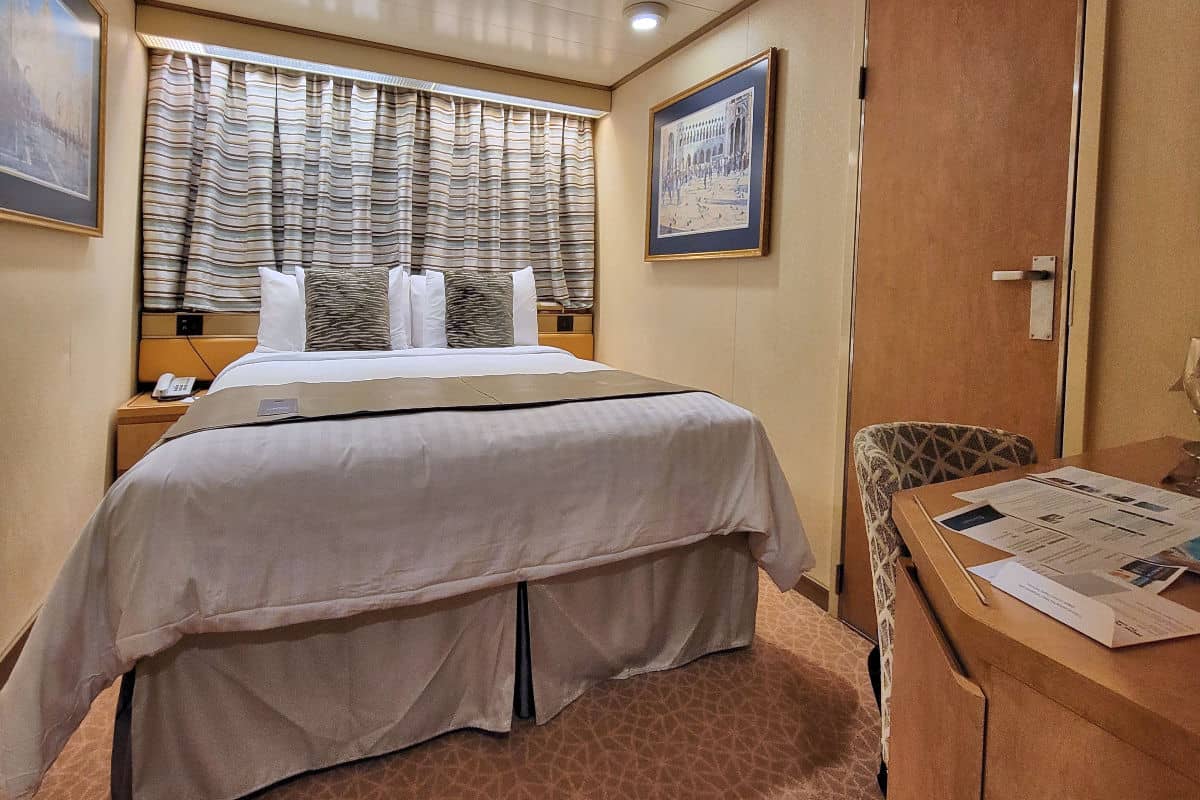
You don’t need a balcony or window to be comfortable. The most important thing is your deck level and where your cabin is from front to back, not the view.
The Bottom Line
Alaska cruising has a reputation for rough water that doesn’t match most of the actual experience. The Inside Passage is calm well over ninety percent of the time. Sitka is the one port that breaks the pattern, and September sailings carry more risk than summer ones.
Pair a sensible cabin choice with one or two remedies that work for you, and seasickness becomes a minor footnote rather than something that affects the whole trip.
If you’re still deciding between routes, our comparison of the Inside Passage and Gulf of Alaska covers the bigger-picture differences beyond just the water conditions.
Most helpful. Thanks. We are planning a cruise to Southeast Alaska out of Seattle, and were advised that the passage west of Vancouver Island, especially going northbound was the worst for rough water. I used to get sick in swings as a kid, so I know I’m susceptible. Guess I’ll get a scopalamine patch.
David, I never found the route from Seattle that choppy but it depends on your tolerance. Enjoy your Alaska cruise!