White Pass Summit Vs. Scenic Train: Which Is Better?
I’ve taken the White Pass Summit bus tour and the White Pass & Yukon Route train ride many times. Each trip has given me a fresh perspective on the mountains above Skagway, Alaska.
While both follow the same historic route, the experience felt different depending on how I traveled. Some days I preferred the slow, steady climb of the train. On other days, the bus’ flexibility and shorter tour commitment worked better with my schedule.
In this article, I break down what each option offers. I compare the scenery, the overall travel time, and the cost. If you’re planning your first visit to Skagway—or your fifth—this comparison gives a clear sense of what to expect from both adventures.
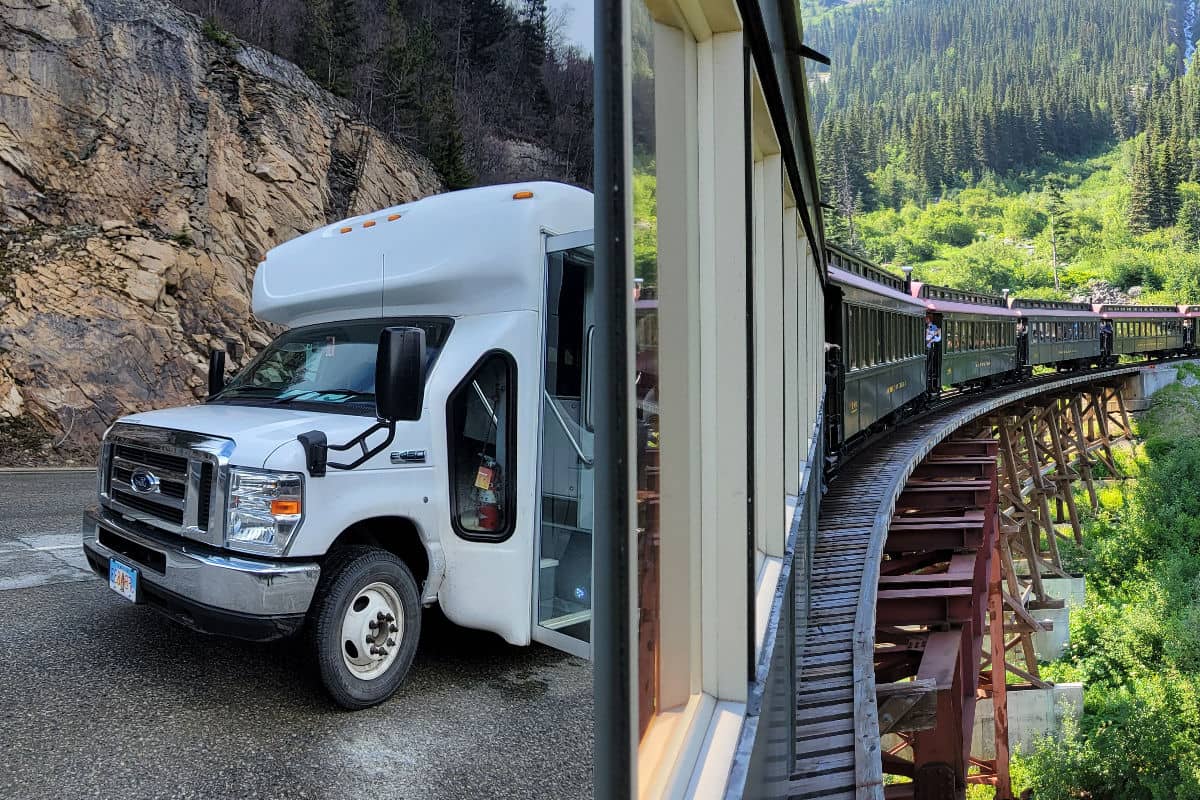
Read to the end to discover if there’s an option to do both on a cruise port day.
Overview Of White Pass Summit And The Train Ride
The White Pass Summit is the historic high point along the Coast Mountains route used during the Klondike Gold Rush. The White Pass railway operates on the original 1898 railroad built to transport prospectors.
The narrow gauge railway is a feat of engineering, built along the edge of steep cliffs in many areas.
Both the summit destination and various transportation methods offer distinct experiences with different pricing, duration, and scenic perspectives.
What Is The White Pass Summit?
The White Pass Summit represents the highest elevation point on the White Pass Trail. At its peak, it reaches 2,864 feet (873 meters) when traveling by rail. By road, the bus reaches the Klondike Summit of 3,292 feet.
The summit marks the international border between the United States and Canada. It offers panoramic views of mountains, glaciers, and gorges. This destination is approximately 20 miles from Skagway, making it accessible by rail and road.

Due to deep snow, the railway doesn’t operate in winter. It begins clearing the tracks in April for the upcoming Alaska cruise season. The Klondike Highway stays open year-round. It’s used to transport goods to and from the Yukon through the port of Skagway.
White Pass & Yukon Route Train Ride Summary
The White Pass Railway has vintage passenger coaches, all named after rivers and lakes. There are several White Pass train routes, which vary in length and cost.
The most popular roundtrip route takes almost three hours and covers a total distance of 40.
Expect to pay:
- Adults: USD 155.
- Children (ages 3-12): USD 77.50.
The train provides wheelchair accessibility, with lifts and designated seating available on a first-come, first-served basis. Accessible restrooms are available on board for passenger convenience. Accessibility tickets cost the same price.
If purchasing tickets through your cruise line, guests board the train at the Skagway port next to their vessel. Very convenient for those who can’t walk far.
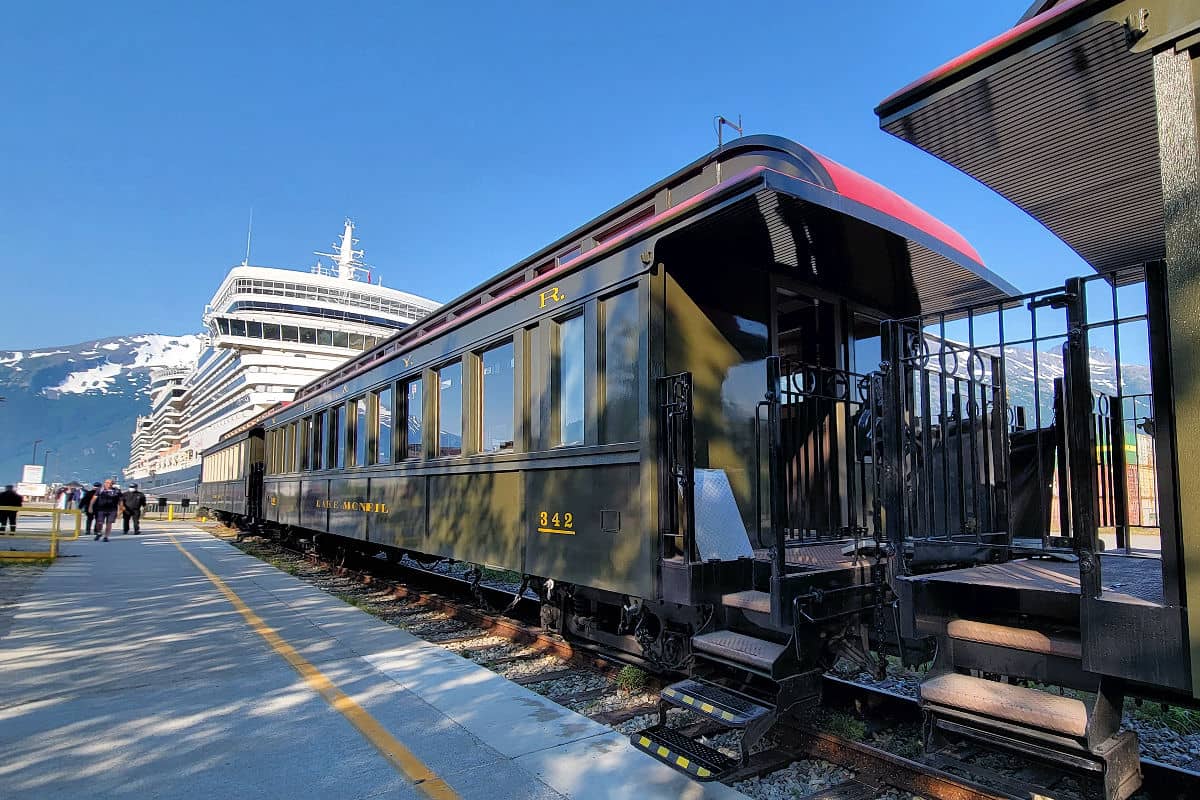
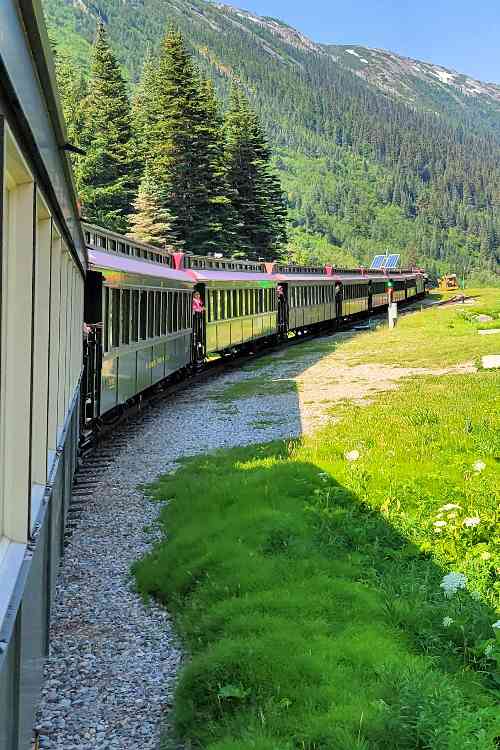
Train journeys run above the tree line, creating unobstructed sightlines. Clear days reveal mountain peaks extending 50+ miles in multiple directions. Expect to view multiple waterfalls, snowy passes, lakes, gorges, and historic trestles.
I still remember my first time on the train, on a hot day in July. The perfect weather made the journey through tunnels and over wooden trestles much more spectacular. The onboard commentary about the Gold Rush prospectors and railroad history added to the experience.
When taking the 2.45-hr roundtrip train ride, passports are not required. Although the train travels into Canada, it doesn’t stop but returns to its starting point in Skagway.
The train journey is best suited to travelers who prioritize comfort and historical experience and enjoy photography. When rounding corners or crossing trestles, we recommend standing outside to get those classic shots of the train.
The first time we took the train, we sat near a family of six. We noticed the children got bored during the ride, so the train ride may be a bit lengthy for younger children. However, children’s activity books are provided free of charge, along with bottled water.
White Pass Summit Bus Tour Summary

For the first part of the journey, the bus tour follows the railway but at a lower level. There are many viewpoints to see the train going over trestles and crossing waterfalls. Passports are required for this excursion.
While the bus tours vary in length, they are typically shorter, up to 2.5 hrs. I’ve done the quick one-hour route and also done a longer one that included a Skagway city tour.
Expect to pay:
- Adults: USD 75.
- Children (ages 3-12): USD 55.
The bus excursion stops at key viewpoints so we can disembark and take photos. Stopping points include Pitchfork Falls, Bridal Veil Falls, the Welcome to Alaska sign, and the Klondike Summit. This summit is 3,292 feet.
In April, the White Pass was thick with snow and dense fog. Shoulder seasons tend to have variable weather and can affect what you see. I also took the train in April, and due to avalanche risk, the train had to turn around before reaching the White Pass.

The bus travels on the Klondike Highway into the Yukon, Canada. The shorter one hour journey isn’t as scenic as the train trip. Longer routes to Summit Lake and Tormented Valley provide picturesque landscapes with diverse vegetation in contrasting climate zones.
The bus route is best suited to those on a budget and guests who prefer a shorter excursion. Do note that some tours are as long as the train, so search for a shorter one if that’s preferred. The bus excursion may also include a city tour, which is not included on the train.
Summit Bus Tour Vs. Train Ride
The train ride offers a historical experience using the original 1898 railroad tracks and vintage passenger coaches. Bus tours provide modern transportation with potentially different scenic perspectives from roadway routes.
Since the bus travels along a lower road, I saw waterfalls that weren’t visible from the train. In April, they were frozen. However, the train’s higher elevation provides stunning views of mountain ridges and deep gorges.

During the train ride, guests can move around and view the scenery from outdoor platforms. Bus passengers remain seated until the bus stops at a viewpoint.
Due to train noise, it’s unlikely to see any wildlife during the railway journey. We saw no animals while riding the train. The Klondike Hwy, however, offers many wildlife sightings, including mountain goats and black bears. We’ve seen black bears along the highway.
Cost may play a significant role in which journey to take. A family of four can pay USD 465 (or more if booking through the cruise line) for the train, or USD 260 for the bus.
Of the two journeys, I found the train much more scenic. The wooden trestles, tunnels, mountain views, and valleys are hard to top.
Train rides provide superior photographic opportunities. The vintage coaches offer large windows, great for landscape photography. While we could take pictures inside, we preferred the unobstructed vistas from the outdoor platforms.
Since the bus tours stop at designated points, guests can take selfies and group photos by waterfalls or at the Welcome to Alaska sign. These shots aren’t possible by train.
Key photo opportunities include:
- Dead Horse Gulch with dramatic depth.
- Inspiration Point panoramic views.
- Multiple trestle crossings for unique compositions.
If you plan to stand outside, dress warmly in the shoulder seasons. The trains have heaters, but the outer decks are frigid.

On the train, the best views heading out are on the left. Sit on the right on the bus. Of course, no matter where you sit, you’ll have great views coming back when sitting on the opposite side.
The train is the only option to reach the trailheads for Laughton Glacier and Denver Glacier, two moderate hikes in Skagway. Train tickets require advance reservations, and the train runs at specific times on certain days.
Here’s an overall comparison of the bus vs. the train option.
|
TRAIN |
BUS |
|
|---|---|---|
|
COST |
USD 77.50–155 |
USD 55-75 |
|
TIME |
2.45 mins |
1 hr. to 2.45 mins |
|
WASHROOMS |
Yes |
No |
|
A/C |
No |
Yes |
|
OTHER |
More scenic/no wildlife |
Stopping points, & maybe wildlife |
Seasonal Considerations
Both train and bus tours operate when ships are in port, from April to October. Early- and late-season excursions will encounter snow at higher elevations. Tour operators may shorten journeys due to road and track conditions. Snow remains possible year-round at the summit.
Seasonal conditions:
- April-June: Snow patches are common, with variable visibility.
- July-August: Clearest weather, warmest temperatures.
- Sept-Oct: Cool temperatures, potential for early snow.
We’ve made the journey many times and at different times of year. July was our favorite time because of clear skies, excellent visibility, and warm temperatures. At the summit, we still saw snow in July.

However, the train trip in April was very scenic. The snow increased as we climbed in elevation. Visibility wasn’t as good, but it didn’t detract from the wintery landscape.
Can You Do Both?
Depending on time in port, it’s possible to do both trips, since I’ve done it. However, most travelers choose one or the other. But did you know there’s another option?
There’s a tour that combines a one-way train with a bus excursion the other way. Guests can’t usually select which mode of transportation comes first. So, some take the bus up and ride the train back.
Choosing Between The Summit Bus And Train Ride
Both train and land excursions to White Pass Summit offer distinct advantages depending on your priorities. Your decision may depend on photography priorities, group composition, and pricing.
Weather conditions can affect both options equally. April tours may be shortened due to snow and avalanche risk, as mine was. September and October will often be rainy.
Independent travelers may prefer to forego both options and rent a car instead. We’ve done the drive from Skagway to Emerald Lake. The drive was fantastic and highly recommended for those who prefer an all-day road trip.
When comparing the bus and train, we recommend the train for those seeking authentic historical transportation. Choose land tours if photography and wildlife viewing are priorities. Both provide access to the same spectacular mountain vistas and Gold Rush landmarks.
