Gold Panning In Alaska: History And Top Tour Experiences
Alaska’s gold rush legacy draws travelers eager to try gold panning in real historic locations. In this guide, I share firsthand experiences from top gold panning sites — from Skagway’s sluice boxes to authentic river prospecting near Fairbanks.
You’ll learn where to go, what gear to use, and how to plan your trip with expert tips that make panning fun and rewarding.
With the right techniques and equipment, anyone can try their hand at panning for gold in Alaska. It’s a fun activity that combines outdoor exploration with a bit of luck. Gold panning has become a tourist attraction, where in most cases, participants no longer pan in the river.
History Of Gold Panning In Alaska
Gold panning has played a pivotal role in shaping Alaska’s history and economy. The allure of gold drew thousands of prospectors to the state, transforming its landscape and population.
Early Gold Rush Era
The discovery of gold in the Klondike region in 1896 sparked the famous Alaska Gold Rush. Prospectors flocked to Alaska, which resulted in the construction of the White Pass Railroad in Skagway, which is still in operation today.
Dawson City emerged as a bustling hub for gold seekers. Many early miners relied on basic methods, focusing on smaller streams and former streambeds.
The Nome Gold Rush followed, further expanding Alaska’s mining industry. These early rushes laid the foundation for Alaska’s enduring relationship with gold mining. Nome, Livengood and Fairbanks used gold dredges to remove the precious metal from the ground.
Gold Panning Today
While large-scale commercial operations now dominate Alaska’s mining industry, recreational gold panning remains popular. Many areas still allow visitors and residents to try their luck at finding gold.
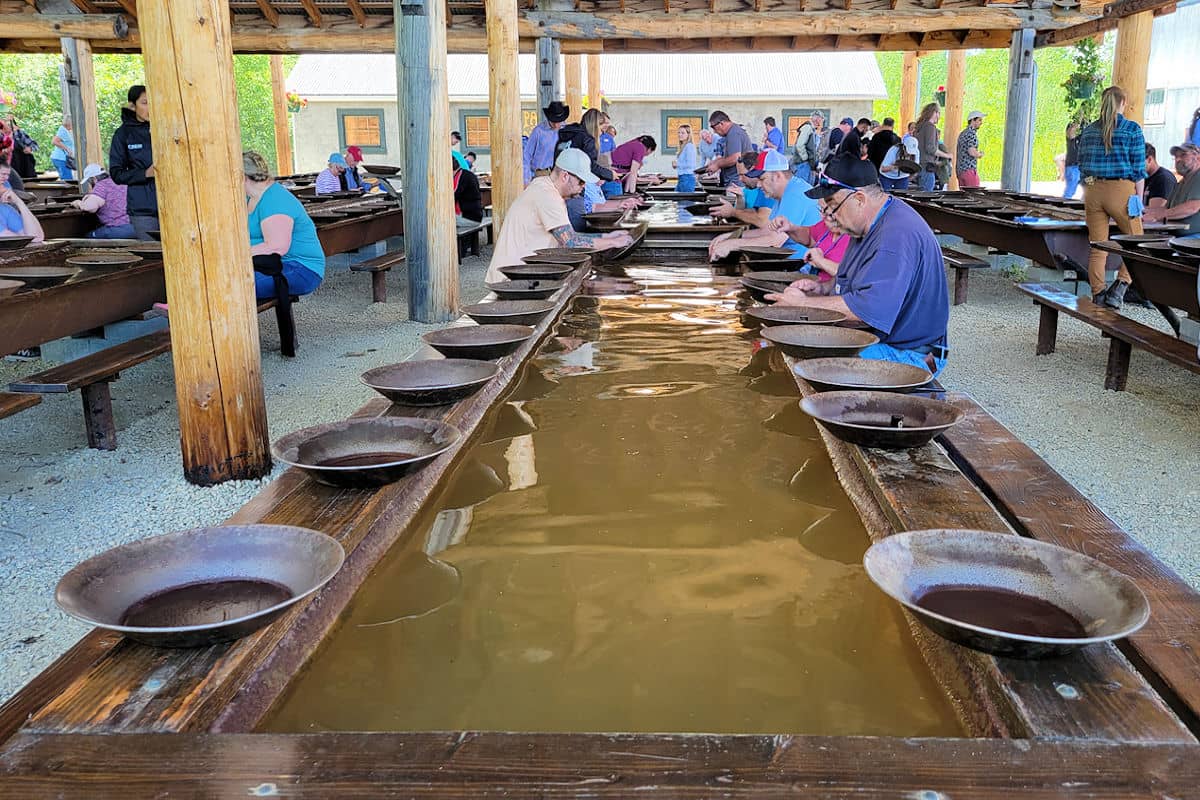
Modern panners use similar techniques to their predecessors, sifting through sediment in hopes of striking it rich. Today, top gold panning sites offer experiences in large wooden sluice boxes instead of the river. It offers the chance to experience Alaska’s gold rush heritage firsthand.
However, tourist gold panning may be done in areas where gold wasn’t found. Gold flakes are added to the paydirt, so tourists can relive the gold rush experience. Although not an authentic experience, it’s a fun adventure suitable for all ages.
We visit Alaska annually and have tried gold panning in different locations and are sharing them with you.
Gold Panning In Skagway
Skagway offers several gold panning experiences that may be combined with other activities. Vendors offer visitors the chance to pan for real gold using authentic techniques and equipment. We’ve included the town’s popular gold panning attractions, suitable for all ages.
Alaska 360 Dredge Town
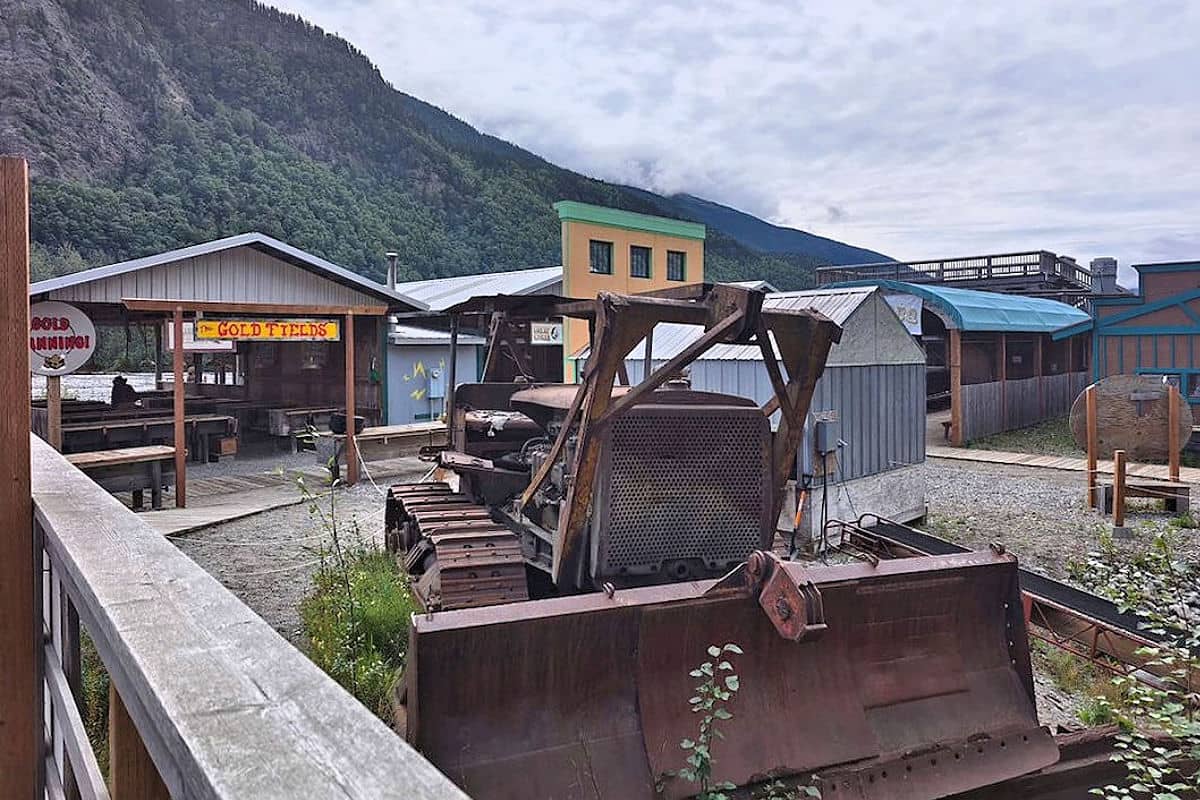
Located at Mile 1.7 Klondike Hwy next to the Skagway River, the dredge town offers hands on experience using gold pans and sluice boxes.
The facility features recreated mining claims and water flumes. While the focus of their tours is gold panning, there’s more to see and learn. The highlight was touring the gold dredge that was in operation until the late 1950s.
The Alaska 360 dredge town is nostalgic, filled with characters in period costume. Their gift shop sells gold panning equipment like pans, classifiers, and vials for those inspired to continue prospecting.
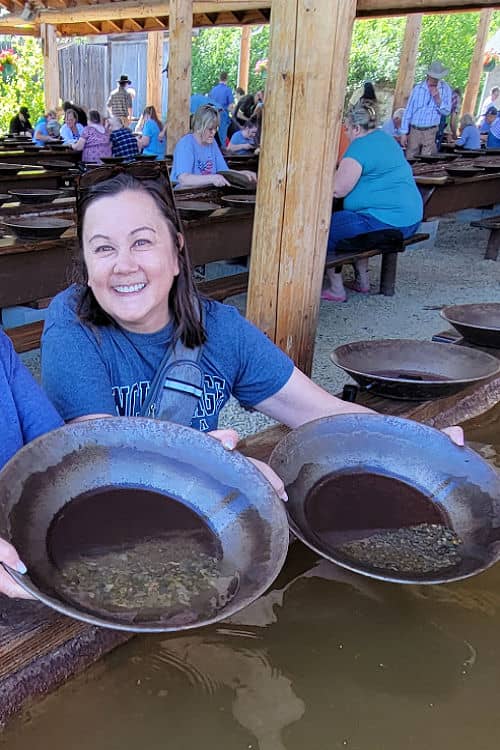
After we cleaned our paydirt, we got to keep the gold we found as a unique Alaskan souvenir. Our gold flakes were weighed and valued and placed in a souvenir locket.
Liarsville Gold Rush Trail Camp
Further up the Klondike Highway, Liarsville Gold Rush Trail Camp has its own historical reenactments. This restored 1898 camp is named after the tall tales journalists wrote during the Klondike Gold Rush.

The camp features costumed interpreters who demonstrate gold panning methods used by prospectors. Visitors learn to use rockers, sluice boxes, and gold pans while searching for real gold. Each visitor is guaranteed to find gold in their pan.
Liarsville also offers a salmon bake, a highlight of the Gold Rush experience. Along with grilled salmon, they include Cheechako chicken, rice pilaf, salad, beans, and hot cider.
The camp’s museum displays authentic artifacts and equipment from the era. If booked through your cruise line, it may be sold as a Rail, Salmon Bake and Saloon tour. This excursion combines Liarsville Gold Rush Camp, with a visit to the Red Onion Saloon and a ride on the White Pass Railroad.
Back Alley Rock Shop
Back Alley Rock Shop in Skagway provides a unique gold panning experience focused on local geology. Although not in a recreated Gold Rush camp, the shop allows visitors to try panning without taking an excursion.

The quirky alley shop is easy to miss on 5th Avenue. Inside, it features a museum with an extensive collection of Alaskan minerals and fossils. The panning takes place outside.
Visitors can learn about the different types of rocks and minerals found in Alaska while panning for gold. The small shop sells gold panning equipment and locally sourced paydirt to continue prospecting at home.
Juneau Gold Panning And History
Juneau’s gold mining legacy dates back to 1880 when Joe Juneau and Richard Harris struck gold. Today, visitors can relive this exciting history through hands-on panning experiences and historical tours.
Gold Creek Salmon Bake & Gold Panning
Gold Creek holds a special place in Juneau’s gold rush story. It’s where Joe Juneau and Richard Harris made their famous discovery, sparking the town’s founding. Today, a venue on the creek serves a delicious salmon bake. This venue is covered with prophane heaters, ideal for Alaska’s wet weather.
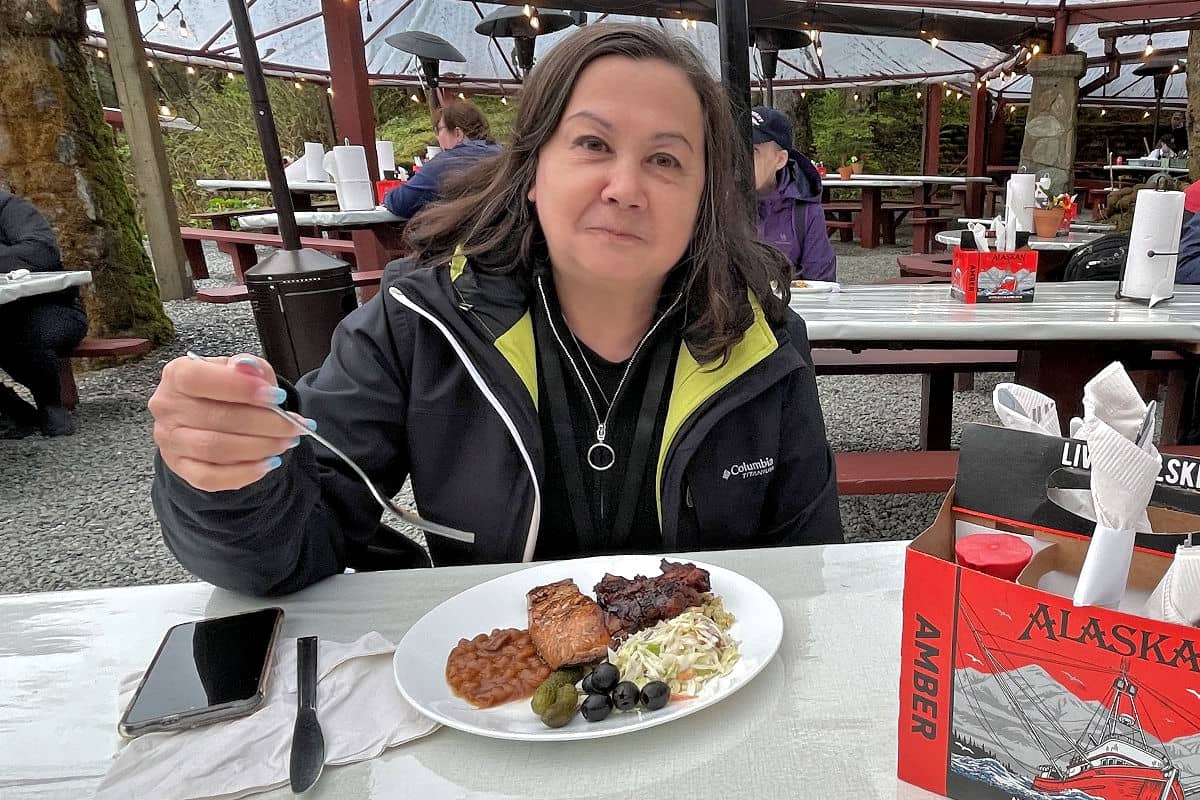
A short walk from the BBQ area, is Salmon Creek Waterfall, and remnants from Wagner Mine. This secluded setting provides another opportunity to practice your panning skills.
Like all other venues, panners are allowed to keep any gold they find.
Last Chance Mining Museum
The Last Chance Mining Museum offers a deeper look into Juneau’s mining history. Located at the site of the historic Alaska-Juneau Gold Mining Company, it houses an impressive collection of mining artifacts and exhibits.
If you’re planning to hike Mount Roberts, Gold Creek Flume, or Perseverance Trail, you’ll find the Last Chance Mining Museum in the same area. While the venue doesn’t offer gold panning itself, it’s a chance to delve into the area’s rich gold mining history.
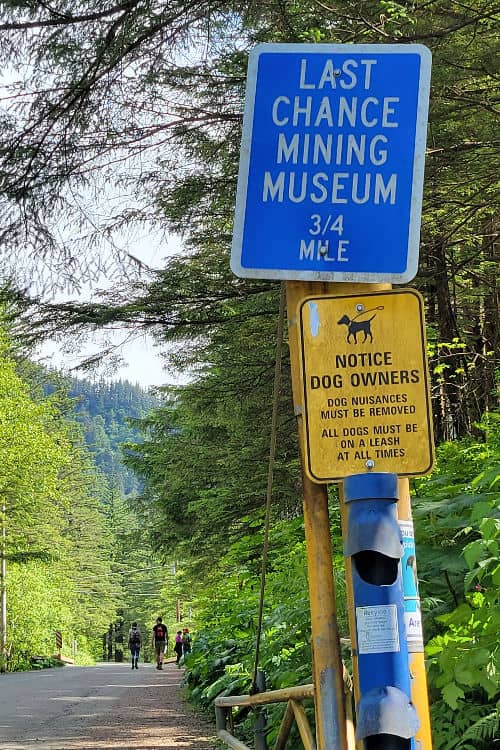
The site features restored buildings and machinery from the mine’s operational days. The museum’s displays bring to life the challenging work conditions faced by early miners.
The power to run machinery came from Gold Creek nearby. We explored its creekside trail and learned about harnessing the river’s power to provide the city’s first hydroelectric power.
Guided tours provide insights into mining techniques and the impact of gold on Juneau’s development. The informative displays include tools like those used for gold panning in Fairbanks and Skagway.
After a day of exploration, head to the Red Dog Saloon downtown to try their Gold Rush Nachos and Gold Diggers Dessert and wash it down with a signature drink called the “Duck fart”.
AJ Mill Gastineau Mill Tour
Contrasting with the other panning tours, this one takes visitors underground to explore a retired mine. It’s fascinating to learn about the equipment used and the harsh conditions endured by miners.

We suggest wearing extra layers when doing this tour, because it’s colder in the mine than it is outside. The excursion concludes with gold panning, and a guarantee to find some golden flakes.
Gold Panning In Fairbanks
Gold panning has played a pivotal role in shaping the history of Fairbanks. The discovery of gold transformed Fairbanks from a remote trading post into a bustling hub.
Today, two popular attractions let guests pan for real Alaskan gold and learn about the area’s rich mining history.
Gold Daughters
Gold Daughters provides an authentic gold panning adventure in Fairbanks. Located at mile 8 of the Steese Highway, this family-run operation lets visitors pan all day long. They work with Fairbanks Gold Co. to ensure rich paydirt for guests to sift through.
Visitors can try their hand at panning using genuine Alaskan gold-bearing soil. The site features a large white geodesic dome that’s easy to spot. Gold Daughters offers affordable fun for families and is open seasonally during summer months.
Gold Dredge No.8

We did the Gold Dredge 8 tour in combination with the Discovery Riverboat on Chena River. It was the highlight of our stay in Fairbanks. This two-hour outing starts with a ride on a narrow-gauge train. Visitors learn how determined prospectors battled harsh conditions in their quest for riches.
Gold Dredge 8 closed in 1959 when gold fell to USD 35 an ounce. While it was no longer viable to mine for gold, the massive machine sits where it stopped operating. Today, visitors can tour this Fairbanks dredge which is now on the U.S. National Register of Historic Places.
At the end of the train ride, tour goers get panning instructions, and try a new skill in the living museum. Each participant receives a poke filled with pay dirt, which they clean in the water. For a small fee, they can receive another poke.
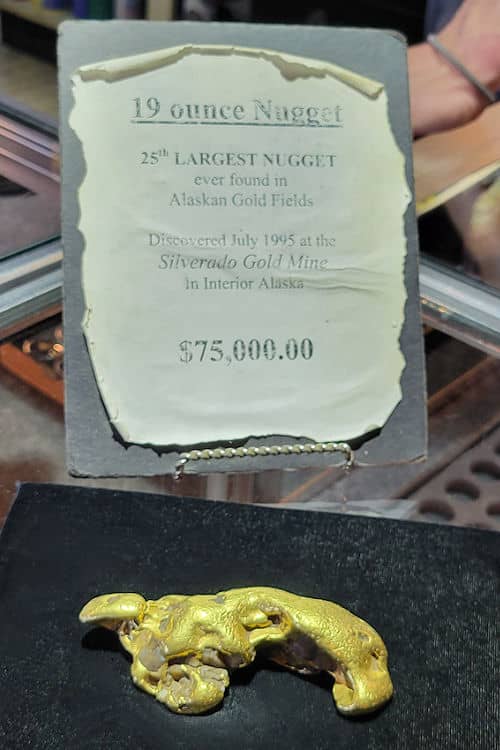
Be sure to browse their gift shop and get a selfie with a 19-ounce nugget. It may not be pretty, but I got to hold USD 75K worth of gold in one hand!
Panning For Gold In Other Areas
Alaska offers numerous gold panning opportunities beyond the popular spots. Here are two lesser known but rewarding locations for some gold seeking fun.
Girdwood Gold Creek Mine
Crow Creek Mine provides a unique gold panning experience, ideal for those staying at the Alyeska Hotel in Girdwood. Some of the properties buildings date back to the late 1800s when the mine was in operation.
Today, visitors can explore the historic 1896 mine and learn about local mining history. After a brief lesson, they can pan for gold in Crow Creek for a rental fee of the equipment. Visitors often find small gold flakes and occasionally larger nuggets. The creek’s cold, clear waters offer ideal conditions for gold accumulation.
Denali Trapper Creek
Trapper Creek, near Denali National Park, offers a more remote gold panning experience. This area has a rich mining history dating back to the early 1900s.
Denali Gold Tours offers half-day and full day prospecting. They provide a more authentic experience, with participants panning in the river. Be warned, panning in the river is back breaking compared to searching for gold in an upright sluice box.
The creek’s gravel bars are prime spots for finding gold. While you may not find small nuggets, fine gold dust is the reward for showing you tried. The best time to visit is during the summer months when water levels are lower. Wildlife sightings, including moose and bears, add excitement to the experience.
