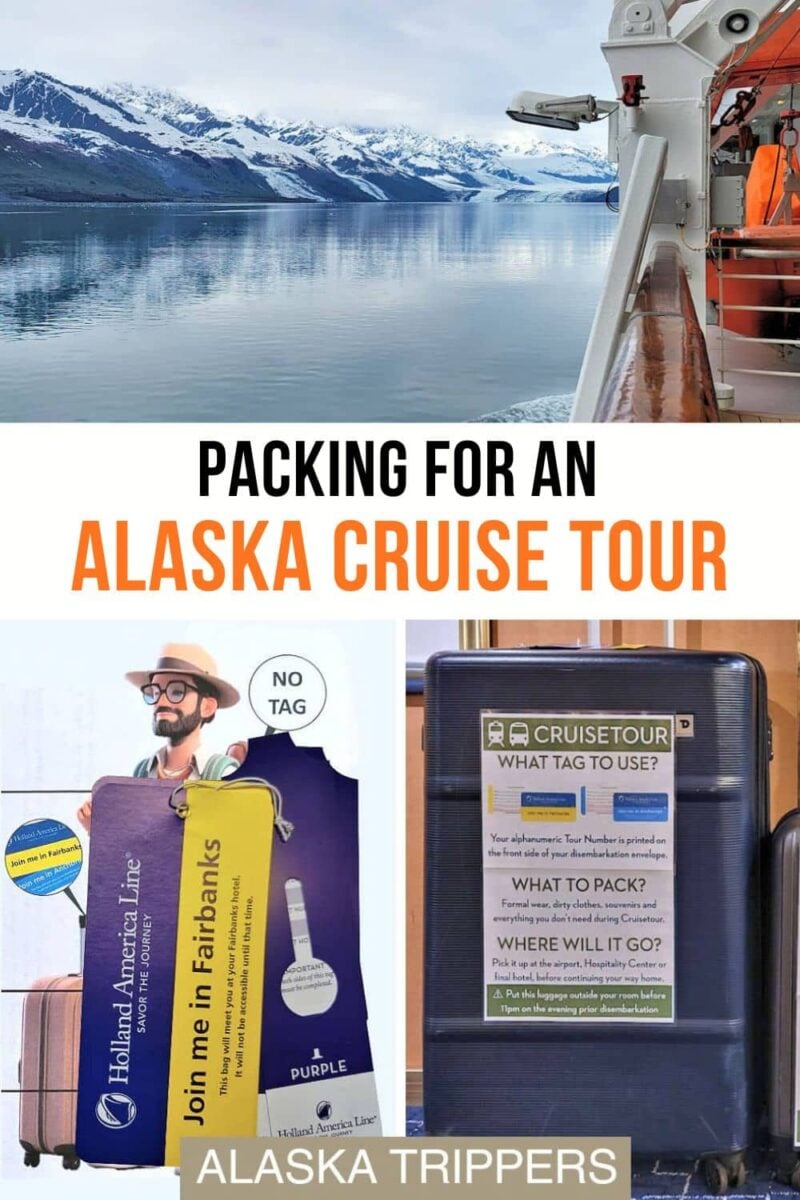
Alaska Cruise Tour Packing Tips: Two Bags, One Smart Plan
Packing for an Alaska cruise tour differs from a regular cruise. Limited luggage space on trains and motor coaches, along with multiple hotel changes, means cruise lines require guests to divide bags between land and sea.
Without a plan, it’s easy to overpack, forget essentials, or drag more luggage than necessary. Your packing list strategy reflects the sequence of your trip. We cruised first, so had all our luggage at the start and separated it before disembarking.
Adopting a straightforward two-bag strategy is optimal, as it allows for efficient organization of belongings for the separate land and sea segments of the trip.
To support this approach, the guide is organized into sections that outline each stage of the Alaska cruise tour and detail how to apply the two-bag system at every point.
Alaska cruise tours require a two-bag packing system. One bag stays with you on land. The other meets you later. Smart planning means packing lighter, staying organized, and avoiding luggage chaos.
Land Tour First Or Cruise First?
Many cruise guests prefer to do the land itinerary first, as it is more demanding, leaving the cruise for relaxation at the end. Early mornings and long days can be tiring. I can comfirm this to be true.
No matter which comes first, cruise lines have luggage rules for Alaska cruise tours that guests must follow. These rules aren’t always explained well. We were confused before our trip and had to improvise during the journey.
How Is Luggage Divided?
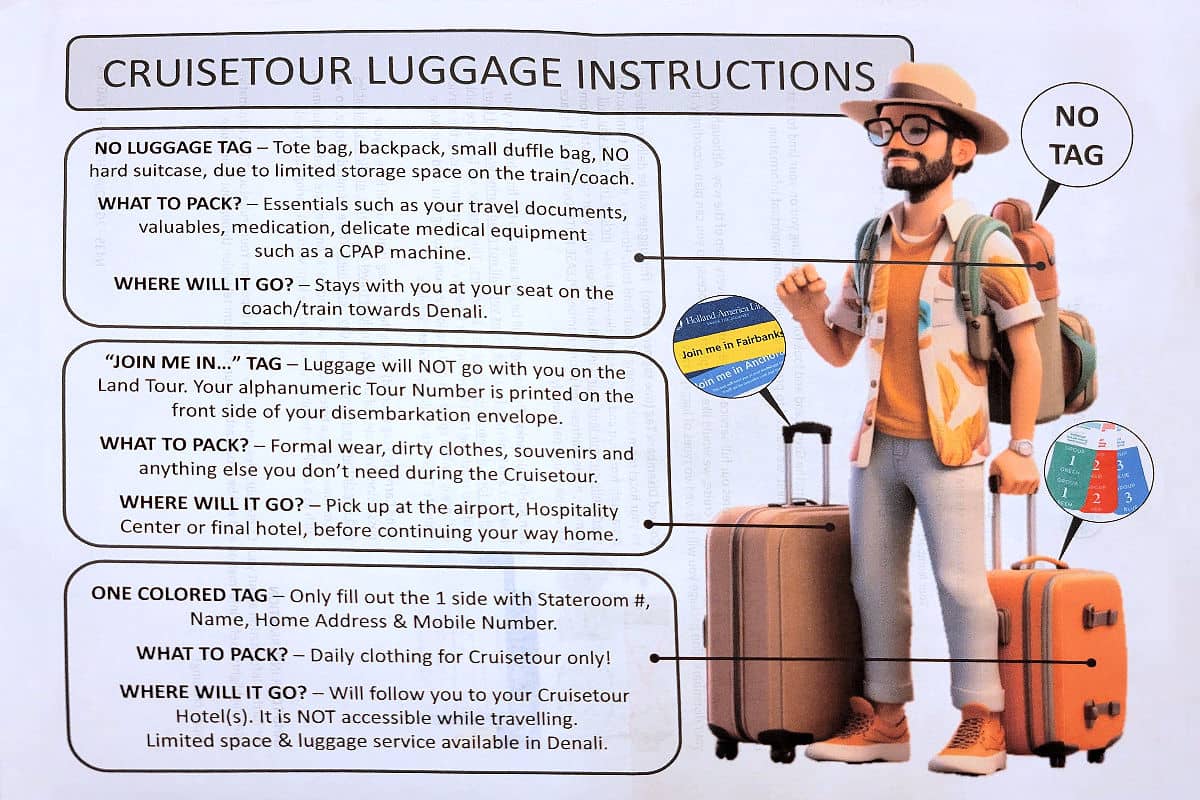
Cruise lines separate your luggage for Alaska cruise and land portions. When cruising first, all bags travel to Seward or Whittier. The land tour usually involves multiple hotel changes. So, cruise lines suggests guests only take what they need for Denali, Anchorage, and Talkeetna.
The other luggage (items we used on the cruise but no longer need) met us at the airport in Fairbanks, but it could be Anchorage if you end there.
When traveling by land first, luggage is divided the same way, and luggage for the cruise travels to Whittier or Seward for embarkation day. Keep essentials like medications, cameras, and electronics in a day bag.
Size Of Luggage
Motor coaches and trains have limited storage space, making smaller bags more practical than oversized suitcases. So, most cruise guests use a larger bag (24” to 28”) on the ocean and a rolling 22” carry-on on land. Packing cubes help organize clothing and gear for different activities.
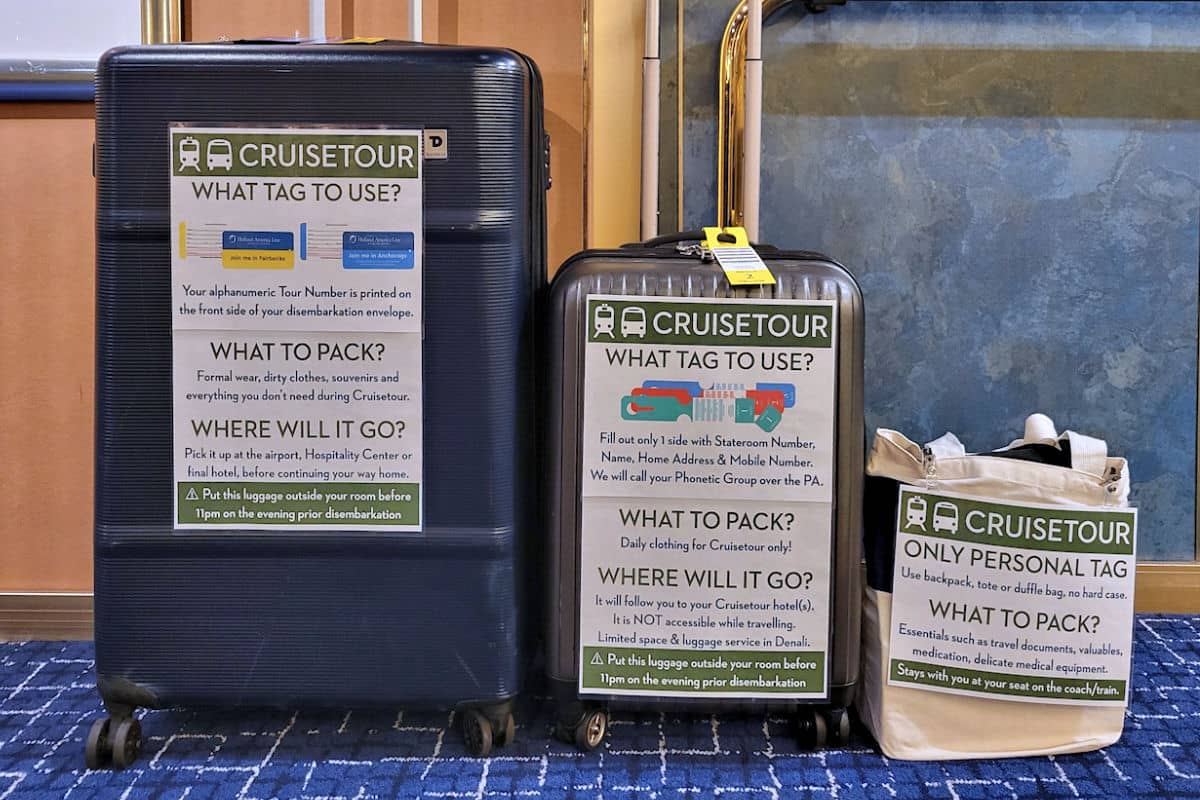
We found the smaller carry-on didn’t work for our 14-day Alaska cruise tour. In addition, land guests do not have access to their checked luggage while transiting between destinations until they arrive at the next hotel.
For this reason, it is advisable to pack a day bag or personal item with essentials such as medications, travel documents, electronics, and an extra layer of clothing, if needed.
Two Bag Packing System Or Share Luggage?
Each traveler generally has their own suitcase for easier handling during transfers. This means each person has two pieces of luggage plus a personal item. A couple would have four cases.
If airlines restrict checked luggage, sharing a bag for the land portion is the way to go. This won’t work when cruising solo.
My sister and I took a 14-day cruise and land tour from Vancouver, each with a 24″ suitcase. After the cruise, we combined what we still needed into one 24″ suitcase for the 7 days on land.
Nine- or ten-day cruise tours spend 2 to 3 days on land. Less clothing is required, making packing simpler.
Cruise lines supply large, color-coded luggage tags for each bag. For the bag carried on land, we received a new tag each time we moved to a different location, and the old tag was removed.
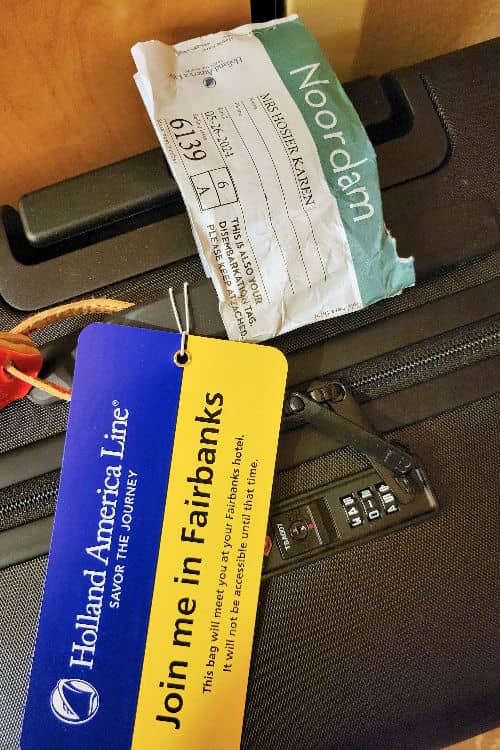
A welcome package at each destination explains the tagging process and lists the next departure time. With Holland America, our welcome package was well organized and easy to follow.
Essential Clothing For The Cruise Itinerary
What to pack for an Alaska cruise tour depends on the time of year and outdoor activities. Temperatures range from 40°F to 65°F during summer.
Wardrobes should balance the requirements of cruise ship dining with functional outdoor gear for wildlife viewing and glacier exploration.
Use the ship’s laundry facilities, especially on longer cruise tours. By doing laundry at the end of a cruise sailing north or at the start of the voyage heading south, cruise guests need half as much.
Shore Excursions Clothing

Comfortable, moisture-wicking layers form the foundation of excursion wear. Pack synthetic or merino wool base layers that dry quickly and regulate temperature better than cotton. Long pants are better than shorts for most Alaska excursions.
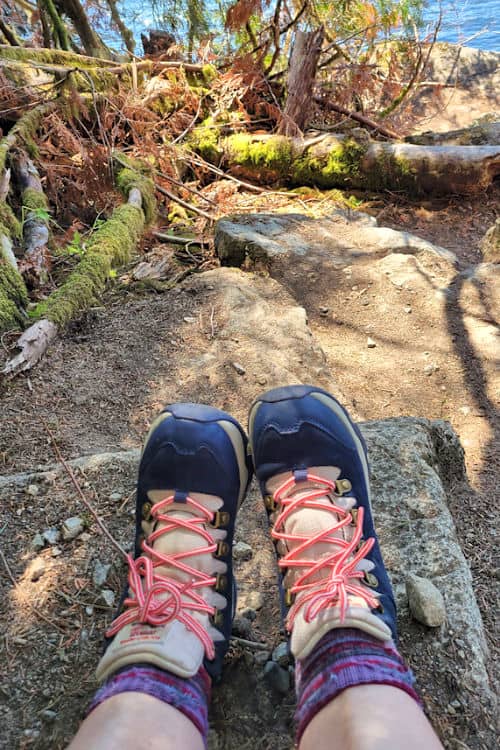
Durable, broken-in hiking boots or shoes with good traction are essential for uneven terrain. Bring thick hiking socks that prevent blisters and provide cushioning. Athletic shoes work for less intensive excursions, such as town walking tours.
Pack versatile clothing items for multiple uses. Cargo pants that zip off work well for peak summer. Down vests add extra warmth on board and during excursions and compress in your suitcase.
Key Excursion Items:
- Quick-dry pants or hiking pants.
- Long-sleeve moisture-wicking shirts.
- 3-in-1 waterproof jacket.
- Lightweight gloves for early morning tours.
Formal Wear
Most Alaska cruises include two formal or semi-formal nights, depending on the sailing length. Semi-formal options work well for Alaska cruises, since the atmosphere is more relaxed than on Caribbean cruises.
Check your cruise line’s dress code, as policies differ. Norwegian Cruise Line does not have dress-up or formal nights. Formal outfits and shoes are not needed during the land portion.
Waterproof Essentials
Rain occurs frequently in Alaska’s coastal regions. Some areas, like Ketchikan, receive precipitation over 200 days per year. A quality waterproof rain jacket with a hood is your most important clothing item. Columbia jackets are our coats of choice.
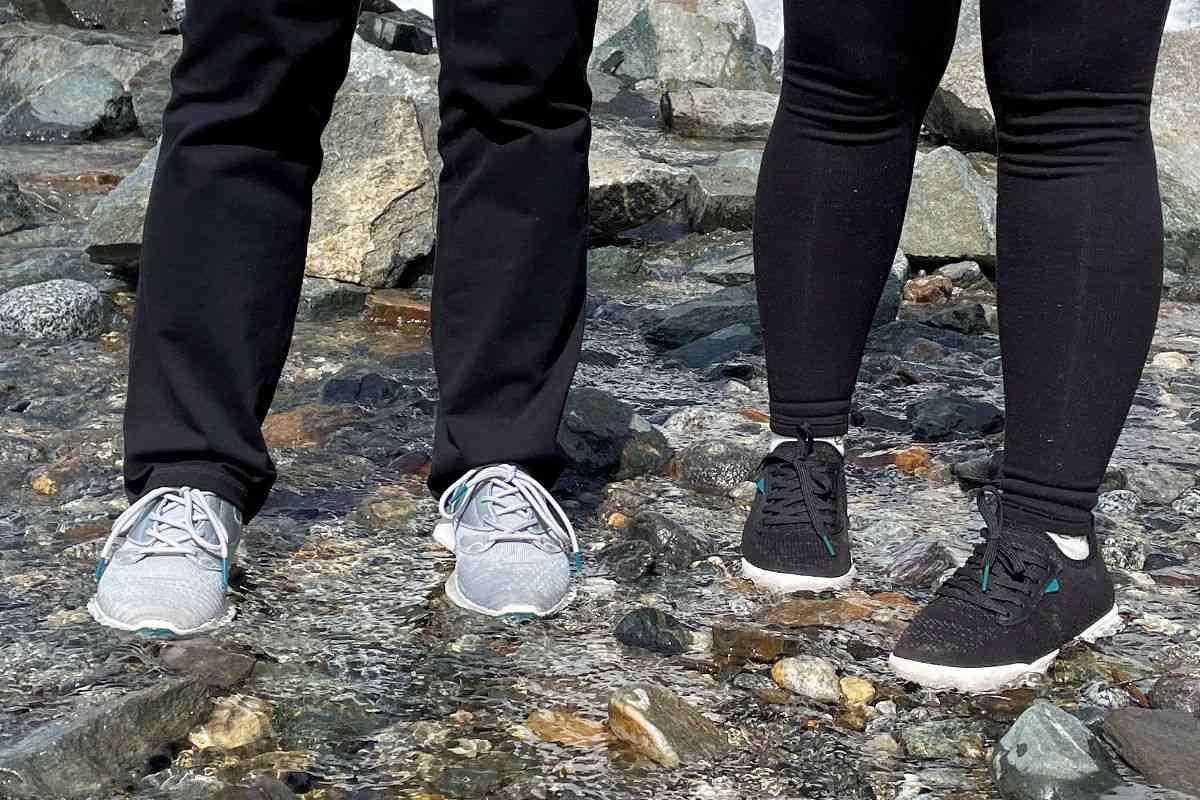
Water-resistant hiking boots or waterproof shoes keep feet dry and comfortable. We prefer Vessi runners, which are waterproof and ideal for Alaska’s wet climate.
A dry bag or waterproof shell for your backpack protects electronics, cameras, and other valuables during boat tours, kayaking trips, and wet-weather hiking.
Glacier Viewing Warm Clothing
Temperatures near glaciers drop 10 to 20 degrees below ambient air temperature. We suggest insulated layers even on warm summer days. Base layers or fleece work well under waterproof coats. Bring a hat and gloves or mittens for extended glacier viewing.
Day-to-day temperature can vary greatly. We’ve worn t-shirts in Glacier Bay National Park one July and just about froze at Hubbard Glacier a few days later.
Glacier Viewing Essentials:
|
ITEM |
PURPOSE |
|---|---|
|
Waterproof Jacket |
Rain protection |
|
Warm hat |
Heat loss prevention |
|
Insulated gloves |
Hand protection |
|
Thermal base layer |
Foundation warmth |
Sea Sickness Solutions
Sea sickness affects many passengers during open water crossings, particularly in the Gulf of Alaska. Wear comfortable, loose-fitting clothing. Tight waistbands and restrictive clothing can worsen nausea symptoms.
Keep an extra layer accessible since feeling cold often accompanies seasickness. Avoid heavy perfumes or scented lotions on clothing, as strong smells can trigger or intensify nausea.
Slip-on shoes work better than laces when you’re feeling unwell and need to move quickly to outdoor decks. Pack a small bag with ginger candies and use a motion sickness patch before reaching the open ocean. Itineraries to Sitka often experience choppy seas.
Land Tour Essentials
Land tours in Alaska require different clothing. Pack away the formal and dining attire in favor of gear for changing terrains, varying weather conditions, and Denali wilderness adventures.
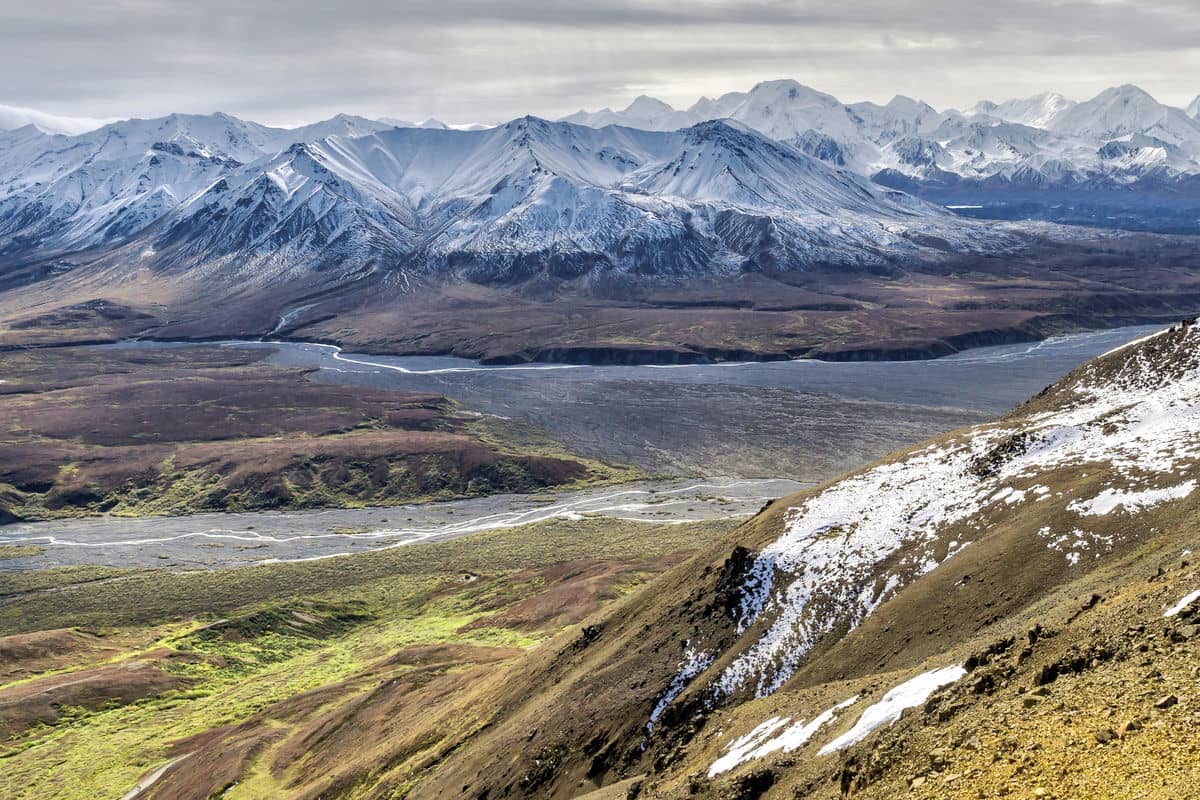
Be prepared for early mornings. During hotel moves, luggage had to be out by 6 am. For our early Tundra Wilderness Tour, we rose at 4:45 am.
Hiking Essentials
When hiking, trekking poles provide stability on trails with roots, rocks, and loose gravel. Collapsible poles pack easily in luggage and adjust to different terrain types.
Pack a reusable water bottle with at least a capacity of 32 ounces. Trail snacks like nuts, energy bars, and dried fruit maintain your energy during longer hikes. Bring zip-lock bags to pack out all trash and food waste, following Leave No Trace principles on public lands.
Outdoor Activities Gear
Layer your clothing to adapt to temperature swings between 45 and 65°F during land tours. Wear layers that can be removed as it warms up. Our mornings and nights hovered in the mid-30s, and the wind was bitter at times.
Bring insect repellent containing DEET for interior Alaska destinations like Denali and Fairbanks. Mosquitoes and other insects are most active from June through August in these regions.
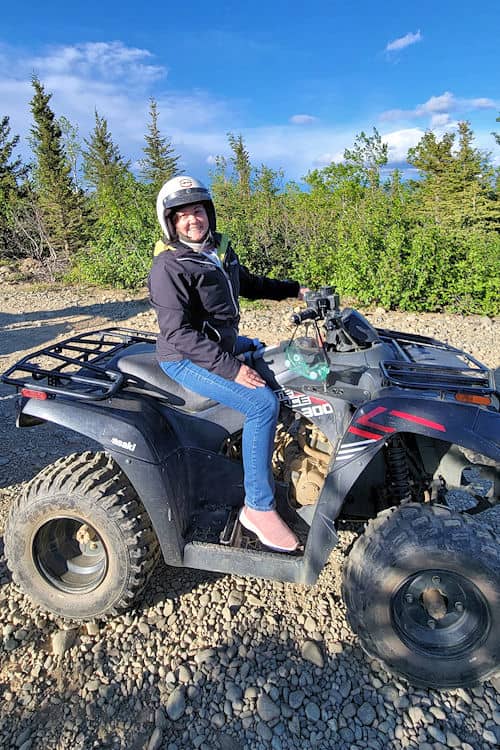
Waterproof coats are recommended for river rafting, and dirt-resistant clothing is recommended for ATV rides in the backcountry.
Binoculars And Camera Equipment
Quality binoculars are essential for Alaska land tours. Wildlife viewing from tour buses and observation points requires at least 8×42 or 10×42 magnification to spot bears, moose, and Dall sheep at safe distances.
While the Denali bus tours have TV screens showing enhanced images of wildlife on ridges, having binoculars aids the search.
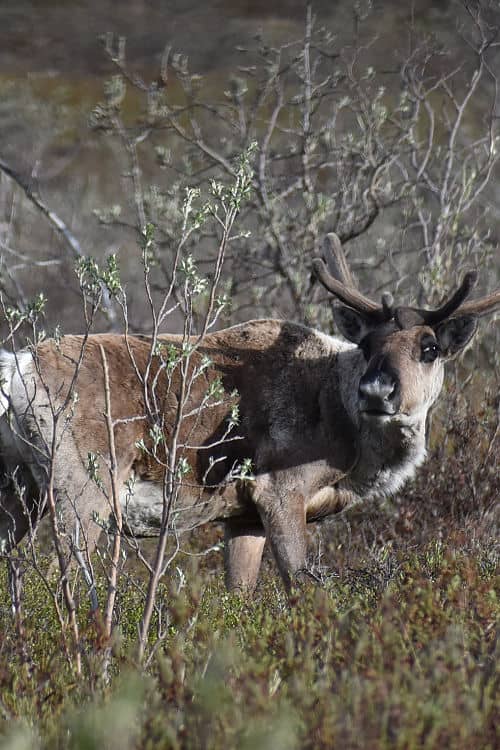
Cameras should handle the low-light conditions common in Alaska’s forests and on cloudy days. Pack extra memory cards and batteries since charging opportunities are limited. I used a 300mm Nikon telephoto lens to capture wildlife at a distance.
Sun Protection Essentials
Alaska’s extended daylight hours during cruise season create intense UV exposure. We experienced 20 hours of daylight in June, making sun protection critical even on overcast days.
Apply SPF 30+ sunscreen regularly during outdoor activities. Pack sunglasses to reduce glare off water, snow, and ice fields. Polarized lenses reduce glare when viewing glaciers and wildlife near rivers.
A wide-brimmed hat provides additional coverage for the face and neck. Choose one with chin straps to prevent loss during windy conditions common in open landscapes.
Daypacks And Bags
A daypack serves as a mobile storage for land tour excursions. Our pack holds water bottles (on the outside), snacks, extra layers, and camera gear inside.
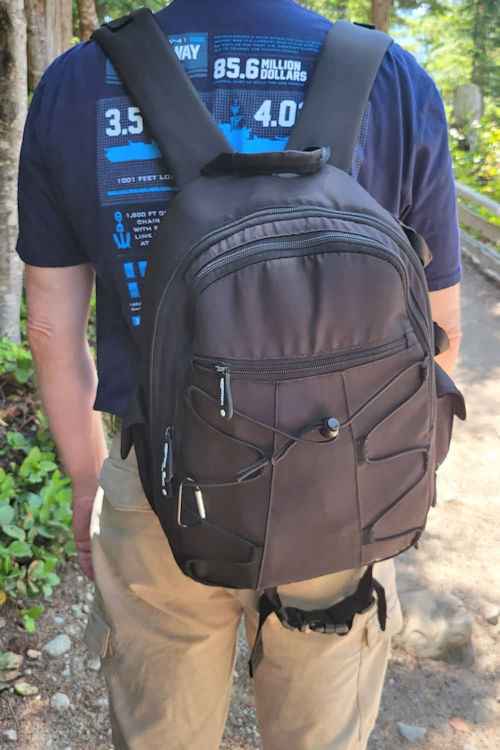
Water-resistant material protects your belongings during unexpected weather changes. Look for packs with external water bottle pockets and easy-access compartments for items you’ll reach for often throughout the day.
Make sure the daypack is big enough to also carry valuables and medication when transiting between destinations.
Final Packing Checklist And Tips
Before zipping up your suitcase, review this checklist to ensure you haven’t missed anything for your Alaska cruise tour. If the land portion comes first, use strategic packing to divide your clothing before your flight.
Pack an eye mask if you’re sensitive to light, as the sun barely sets in Denali and Fairbanks around the summer solstice. I found the daylight at night a bit disorienting.
Packing smart transforms an Alaska cruise tour from stressful to seamless. With the right two-bag strategy and layered packing plan, you’ll spend less time managing luggage and more time enjoying glaciers, wildlife, and wild landscapes. Plan once and relax the entire trip.