
Alaska In Winter: Northern Lights, Dog Sledding, And More
As America’s “Last Frontier,” Alaska has a way of getting under your skin. I’ve lost count of how many times I’ve traveled there, but each season brings pleasant surprises, with winter contrasting with the long days of summer.
If you’re thinking about visiting Alaska in winter, know this: the northern third of the state lies inside the Arctic Circle. Winter hits early, stays late, and absolutely demands respect.
From November to March, temperatures drop fast, daylight disappears, and landscapes transform into a frozen wilderness that’s as harsh as it is breathtaking.

But visiting in the off-season also means lower prices, no crowds, and the chance to experience Alaska the way locals do; quiet, raw, and unforgettable.
Alaska Winter Weather: The Reality Check
The weather in Alaska is wildly different depending on where we go. In October, rain becomes snow at higher altitudes. By November, everything is white. December brings the winter solstice, and with it, the darkest day of the year.
Anchorage in January averages 17°F (-8°C), which surprises many who expect bone-cracking cold. Don’t get me wrong—it can be bone-cracking—but after spending winters in Toronto most of my life, Anchorage honestly felt mild by comparison.
Ketchikan, where we’ve visited multiple times, is another story. It rains there like it’s a competitive sport, 260% more than the average U.S. town. We always pack umbrellas, but on our cruise last year, it was sunny and hot. That’s Alaska for you: predictably unpredictable.

Winter By Month Breakdown
November: The First Real Snowfall
- Snow settles statewide.
- Days shorten quickly.
- Temps drop below freezing in most regions.
- Interior Alaska enters deep winter conditions.
Best For: dog-sledding, early aurora viewing, quiet travel.
Downside: limited daylight and seasonal closures begin.
December: Darkest & Coldest Start
- Winter solstice brings extreme darkness.
- Interior temperatures often reach -20°F or colder.
- Christmas lights and festivals brighten the cities.
Best For: aurora tours, hot springs + ice museum, holiday events.
Downside: very limited daylight (5–6 hrs. in Anchorage, 3–4 in Fairbanks).
January: Deep Winter but Surprisingly Manageable
- Coldest month overall.
- Anchorage stays “warmer” than most imagine (around 17°F).
- Fairbanks is bitterly cold with crisp, clear skies—excellent for night photography.
Best For: northern lights, dog sledding, winter rail travel.
Downside: long nights; need proper winter gear.
The following table shows a quick comparison of months, and compares interior Alaska temperatures and Fairbanks average daylight hours.
|
Month |
Alaska Temps (°F) |
Daylight hrs |
Notes |
|---|---|---|---|
|
November |
0°F to 10°F |
6 hrs |
Deep winter conditions begin; rapid loss of daylight |
|
December |
-10°F to -25°F |
3.5 hrs |
Darkest month; extreme cold; solstice low |
|
January |
-15°F to -30°F |
5.5 hrs |
Bitter cold, but slowly lightening each day |
|
February |
-5°F to -20°F |
8.5 hrs |
Big jump in daylight; still very cold |
|
March |
0°F to 15°F |
11.5 hrs |
Winter peak conditions, bright days, great aurora viewing |
February: The Light Starts Returning
- Daylight increases dramatically.
- Still cold, but more tolerable.
- Snow is deep and beautiful — perfect for outdoor sports.
Best For: skiing, snowshoeing, snowmobiling, wildlife tracking.
Downside: can still be icy; interior remains very cold.
March: Alaska’s Best Winter Month
- Longer days (11 hours in Anchorage).
- Still plenty of snow and weather is more stable.
- The Iditarod kicks off — huge winter highlight!
Best For: Iditarod spectators, northern lights, photography, multi-day adventures.
Downside: slightly higher pricing than early winter.
Winter Across Alaska’s Regions
Interior Alaska

Fairbanks and the surrounding interior are the real winter heavyweights. With no coastal waters to soften temperatures, this region plunges deep into the minus zone.
In January, Fairbanks often drops to -15°F (-26°C). Yet somehow, Anchorage—just a quick flight away—can be 30 degrees warmer.
If you visit Fairbanks in summer, experience a touch of winter by going inside the 40 Below Zero room at Steamboat Landing. I tried it first thing in the morning when the inside temperature was -65°F. It wasn’t bad for the five minutes I was there.
Southeast Alaska
Southeast Alaska is home to many of the towns visited by cruise ships during the Alaska cruise season of May to September. Juneau, Ketchikan, Sitka, and Skagway all experience milder coastal winters with lots of precipitation. When snow falls, it falls fast and deep.

Aleutian Islands
Windy, snowy, and wet—but usually hovering just above zero. The islands feel like the edge of the world.
Kenai Peninsula
Southcentral Alaska’s Kenai Peninsula sits in a coastal sweet spot: cold winters that are manageable. January temperatures range from 12–24°F (-11 to -4°C).
Daylight In Alaska: The Biggest Adjustment
Alaska’s winter daylight is not for the faint of heart. The farther north you go, the shorter the days.
Utqiagvik (Formerly Barrow)
Utqiagvik experiences 67 days of complete darkness. I love Alaska, but I could never manage that. Hats off—seriously—to the 4,000 residents who thrive there year-round.
Anchorage
Anchorage gets about five hours of daylight near the solstice. On the flip side, summer brings almost 20 hours of daylight, making it an opportune time for outdoor activities in Anchorage. The rest of the day is twilight, so it’s not entirely dark.
Ketchikan
Ketchikan—close to British Columbia—has almost seven hours of winter daylight. As someone from Vancouver, that feels perfectly manageable.
What to Wear in Alaska in Winter
Packing for winter in Alaska is an exercise in common sense—and humility. Even growing up in Toronto didn’t fully prepare me for the type of cold Alaska delivers. The key is to prevent exposed skin and layer properly.
Here are some guidelines for what to wear in Alaska and how to manage winter temperatures.

What you bring will vary based on your plans, but you’ll definitely need thermal layers, a wind-resistant jacket, sturdy insulated boots, and pants.
Winter Activities In Alaska
Summer may be Alaska’s sightseeing season, but winter is for adventurers. Many Anchorage-area activities continue year-round—just with more snow and fewer tourists. Here are the standouts.
Visit Denali National Park
Denali is breathtaking in any season, but winter gives it a kind of rugged clarity that summer never quite matches. With 6 million acres of wilderness and the towering 20,310 ft Denali itself, this is a place that humbled us instantly.
Denali winter activities include dog sledding, cross-country skiing, and snowmobiling tours. I’ve stood on the Ruth Glacier before—not in winter—and the sheer thickness of it (3,800 ft!) is mind-blowing.
If you want to see Denali in winter without freezing your eyelashes off, consider a guided ski or snowmobile tour.
Chase The Aurora Borealis

Aurora viewing in Alaska, is enough reason to visit the state in winter. Standing outside in -20°F watching green curtains ripple across the sky is unforgettable. Colors are more vivid than those in the lower 48.
The best viewing season runs from late August through April, and Fairbanks is often the heart of the action. Colors range from green to pink, purple, and deep red—each one a tiny collision of particles high in the atmosphere.
There’s a good selection of lodges and accommodations in Fairbanks that cater to aurora chasers. Outside the downtown core, away from light pollution, their rooms have large windows to watch the northern lights, and most hotels offer a wake-up call if the aurora appears.
Recommended Aurora Stays
- Aurora Villa has breakfast and self-serve parking included.
- Aurora Camp sits near Murphy Dome, offering one of the best viewing locations.
Go Dog Sledding
Dog sledding was on my bucket list long before I first tried it in Banff, where my face half-froze and I wore four layers just to stay functional. Alaska in winter is similar: frigid, exhilarating, unforgettable.
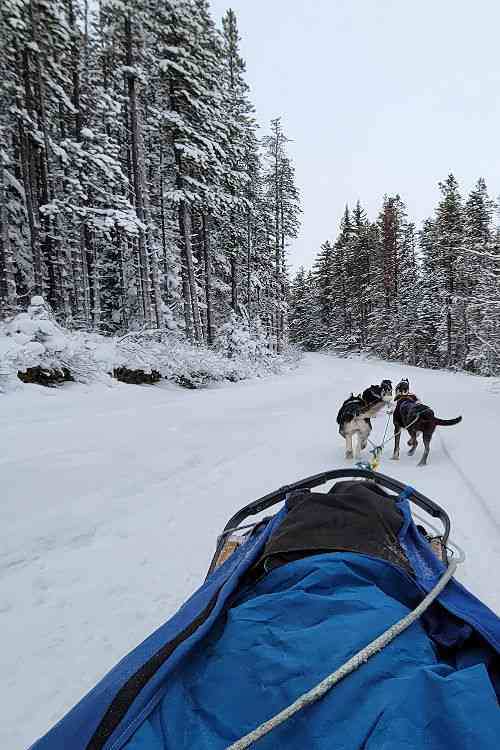
In Juneau, summer travelers pay USD 600+ for helicopter-access dog sledding on a glacier. In winter, the same thrill costs less than half. In Fairbanks, you can even book a moonlight tour—with a chance to see the aurora.
Experience The Winter Solstice Festival
Anchorage’s Winter Solstice Festival is one of those charming local traditions that make winter feel festive instead of bleak. Ice skating, fat biking, sleigh rides, and twinkling lights everywhere—it’s a beautiful celebration of the return of daylight.
At Cuddy Family Midtown Park in Anchorage, they celebrate the return of daylight on December 21st, the darkest day of the year.
Ride The Winter Train
The Aurora Winter Train travels between Fairbanks and Anchorage It is a 12-hour journey through snow-draped wilderness. Alternatively, the shorter route to Talkeetna is just three hours one-way.

I love how wildlife becomes easier to spot in winter—moose against the white snow practically glow. But trying to spot an arctic fox is a different story.
Try Winter Sports
If you love outdoor winter sports, Alaska is your playground. Snowshoeing, snowboarding, skiing, snowmobiling, fat tire biking—there’s no shortage of adrenaline here. Snowmobiling in Southcentral Alaska runs from November through April and covers some unreal terrain.
Fat tire biking, by the way, is exactly as fun and ridiculous as it sounds. Grab a bike with fat tires and enjoy bouncing across snowy trails like a kid again. No experience required, just the ability to ride a bike.
The Iditarod: Alaska’s Most Iconic Winter Event

Every March, mushers and dog teams take off from a ceremonial start in Anchorage for a 1,000-mile endurance race to Nome. While I’ve not attended the event, I’ve stood at the ceremonial start in Anchorage and imagined the energy of the sled dogs ready to race.
It’s not just a race—it’s a living piece of Alaskan culture, honoring historic sled dog routes used for medicine delivery, mail, and survival.
Whether you catch the start in Anchorage or watch teams pass checkpoints along the route, the Iditarod is one of the most thrilling winter spectacles on Earth.
One summer, we visited Tagish Lake Kennels and met Michelle Phillips, an Iditarod veteran. She claimed 4th in the Iditarod 2025 and 1st in the 2025 Yukon Quest, a 450-mile race.

Final Thoughts
Visiting Alaska in winter pushes you outside your comfort zone—but in the best possible way. If you live in the warm southern states, you might wonder why anyone would choose snow and darkness. The answer is simple: because it’s extraordinary.
Winter in Alaska is raw, majestic, and memorable. Respect the weather, travel with experienced guides, and prepare appropriately. An Alaska winter itinerary will provide incredible memories (and photos!) that feel straight out of a documentary.
Seize the adventure. Alaska in winter will exhilarate every one of your senses.

I just found my home in my next life!!!